Hyperthermia for Breast Cancer: What Research Actually Shows
- January 26, 2026
- Written by : Rebecca LaMarca, MSN, APN-BC, CNS

Each year, millions of women worldwide receive the life-changing diagnosis of breast cancer — research shows one in every eight U.S. women will be diagnosed in their lifetime. While standard care frequently still encompasses surgery, chemotherapy and radiation, other therapies are emerging that show promise in adjunctive use or palliative care.
Medical hyperthermia is displaying potential for some patients. Explore the science and research behind this treatment to understand its benefits and limitations.
What Are Medical Hyperthermia Treatments?
Medical hyperthermia is the application of controlled heat to the body. It’s different from general exposure to heat, such as that from the sun or a sauna or steam room. It typically targets a specific area at a consistent temperature of about 43° Celsius or 109° Fahrenheit for approximately 1 hour per treatment.
These treatments fall into three general categories:
- Local, which is the application of heat to a small area where the cancer is located
- Regional, where the heat targets a larger area of the patient
- Whole-body, which involves a thermal chamber or wrapping of the entire body with specialized heating blankets
All can be delivered either externally, through the application of probes or other solutions, or internally, often through the insertion of devices directly into the tumor or the area surrounding it.
How Does Medical Hyperthermia Work?
This treatment works primarily at the cellular level. Cancer cells typically have poorer blood supply and less efficient cooling mechanisms than healthy tissue. These characteristics make cancer cells more susceptible to heat, which damages cell structures and proteins and inhibits the cells’ ability to repair themselves.
The Results of Medical Studies Into Hyperthermia for Breast Cancer
Two of the earliest published studies from the late 1980s and early 1990s revealed some highly convincing evidence that medical hyperthermia used in conjunction with radiation therapy improved patient outcomes. The studies evaluate efficacy through the lens of complete response (CR) rate, or the percentage of patients in whom all detectable signs of cancer disappear after therapy.
The first, published in 1988, focused on 35 patients. The overall CR rate for patients in the study receiving a combination of radiation and hyperthermia was 57%. Results were even more encouraging for small lesions, with a CR rate of 80%. The second, published in 1991, was the first randomized clinical trial. Analysis established the CR rate for combined treatment at 52% versus 39% in patients receiving only radiation.
Numerous other early studies exhibited similar success rates for concurrent hyperthermia for cancer treatment, reinforcing previous findings. The evidence is particularly strong for those with recurrences who have previously undergone radiation, indicating benefits may also apply to a broader range of cancer patients in the future.
Recent Studies
More recent research and clinical trials have produced similar results. A 2005 study of 109 patients reported a CR rate of 66.1% for combined hyperthermia and radiation compared to 42.3% in patients treated with radiation exclusively. By 2013, the National Comprehensive Cancer Network (NCCN) had included hyperthermia as a treatment option for breast cancer recurrences.
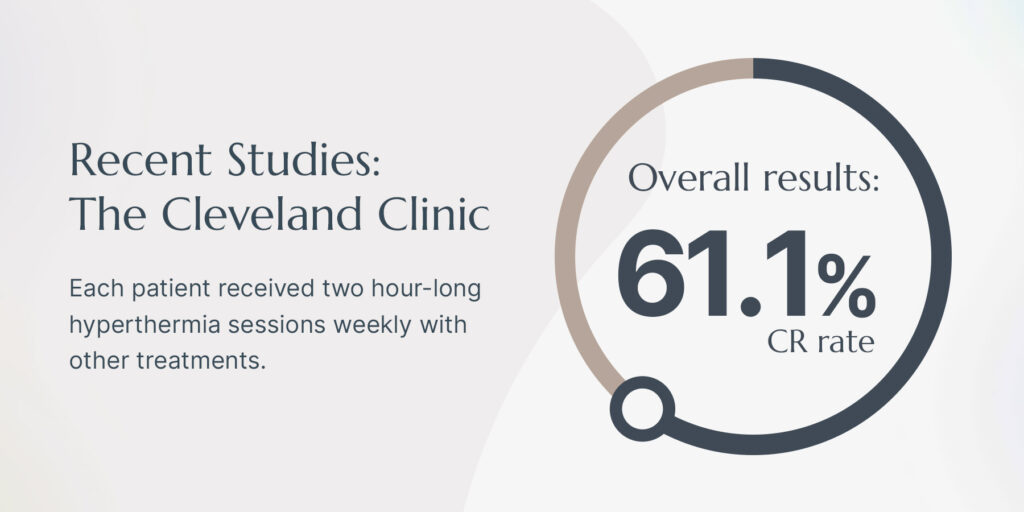
The Cleveland Clinic also recently undertook a study into the benefits of radiation combined with hyperthermia, or what the institute terms thermoradiotherapy, between 2011 and 2017. As with the research above, the patients involved in the study were breast cancer patients experiencing recurrences.
Each patient received two hour-long hyperthermia sessions weekly with other treatments, such as electron therapy or intensity-modulated radiation therapy. Overall results demonstrated a CR rate of 61.1%. The clinic is currently conducting research to determine if hyperthermia may also stimulate the immune system and trigger a cancer-killing response.
Research Limitations
As encouraging as these studies are, it’s equally important to acknowledge that the research does have some limitations to consider.
Most studies to date center on patients experiencing a recurrence. The reason for this is straightforward — preventive measures like mammograms and self-exams have improved early detection. Those with localized breast cancer who seek treatment have a relative five-year survival rate of over 99% with conventional therapies alone. Similarly, those with regionalized disease and no distant spread have a relative five-year survival rate of 87%. Given these high rates with the existing standard of care, oncologists may be less likely to incorporate additional therapies.
Additionally, most studies focus exclusively on hyperthermia combined with radiation. There’s little clinical research on hyperthermia in conjunction with chemotherapy or with both radiation and chemotherapy.
Finally, many variables can impact the efficacy of medical hyperthermia concurrent with radiation, from the treatment temperature and duration to tumor size and radiation dose.
Benefits and Drawbacks of Medical Hyperthermia Treatments
Medical hyperthermia may offer many advantages for breast cancer patients, including:
- The potential for increasing the efficacy of conventional treatments: The application of heat dilates blood vessels, allowing for higher oxygen delivery that can enhance the effectiveness of radiation. The dilation also increases blood flow to tumors, which may sensitize cancer cells to chemotherapy.
- Targeting of weaker cells: This treatment helps protect healthy cells since it specifically targets weaker and more susceptible cancerous cells.
- Surgical alternative: Hyperthermia, especially when delivered concurrently with radiation, may be a viable option for treating tumors when surgery isn’t possible.
- Overcoming radiation resistance in previously treated patients: Medical hyperthermia may improve the chances of CR for patients with recurrences who receive lower doses of radiation in subsequent treatments.
However, there are also disadvantages and risks to weigh when considering this treatment. Potential side effects include:
- Pain at the treatment site
- Burning or the temporary formation of blisters
- Gastrointestinal issues, such as nausea, vomiting or diarrhea
- Swelling
Dehydration is another common side effect of medical hyperthermia treatments due to the excess sweating it may cause. It’s especially important to stay hydrated throughout cancer therapy. Adequate fluid intake can help encourage healthy organ function, flush toxins from your body and manage the side effects of other treatments, like chemotherapy. Familiarizing yourself with the signs of dehydration will equip you to recognize it so you can take steps to increase your fluids.
Ensuring you get enough vitamins is also essential to supporting your body through treatment, especially vitamin C. This antioxidant can stimulate healing and boost your immune system. However, it can be challenging to absorb this and other vital nutrients through traditional oral methods due to cancer treatments’ side effects. Many oncologists approve IV therapy to help support patients throughout every step of the journey and promote proper intake.
Get Specialized Treatment Support From IV Elements
IV Elements is the professional IV provider you can trust in New York City, New Jersey and the Philadelphia metropolitan area. Our experienced and highly qualified nurses deliver specialized IVs for chemo and radiation recovery in our centers. We can also come to you for maximum comfort.
Request your preferred appointment online or call our compassionate team at 888-292-0790 for personalized assistance booking your services.
 Share
Share  Tweet
Tweet  Share
Share  Email
Email