Heavy Metal Poisoning: The Hidden Epidemic in New Jersey’s Industrial Areas (County-by-County Analysis)
- February 10, 2026
- Written by : Rebecca LaMarca, MSN, APN-BC, CNS

New Jersey has a long industrial history that has led to widespread heavy metal contamination and exposure risks. According to a study conducted by the New Jersey Department of Health — which examined 2,988 blood samples and 1,007 urine samples from laboratories and blood banks within the state — 8.1% of NJ adults had elevated blood mercury levels, compared to 5.98% of U.S. adults. Additionally, 4.1% tested high for arsenic in their urine, exceeding the 2.87% national rate.
The bioaccumulation of heavy metals, like arsenic, mercury and lead, can lead to serious health effects. Gaining awareness of your exposure risk and getting testing for heavy metal toxicity are the first steps to protecting your health.
A Look at Industry-Related Heavy Metal Poisoning in New Jersey
New Jersey’s industrial legacy spans more than a century, leaving behind sites containing lead, arsenic, mercury, cadmium, chromium and other contaminants. Many of these sites remain on the Environmental Protection Agency’s National Priorities List and require long-term monitoring and remediation efforts.
For residents, this means being aware of the risk of heavy metal exposure and chronic toxicity. Those who live near industrial sites face exposure through the following primary pathways:
- Ingestion: Consuming fish and crabs caught in polluted waterways, like the Passaic River or Berry’s Creek, or drinking from contaminated private wells.
- Inhalation: Breathing in dust from contaminated soil or industrial waste.
- Direct contact: Absorbing toxins through the skin by touching contaminated soil, sediment or water.
County Health Analysis
Due to the state’s high number of contaminated industrial sites, residents in most counties are at elevated risk of heavy metal exposure. That said, the following counties are particularly impacted by NJ’s industrial toxins:
1. Essex
Essex County has been an industrial hub for centuries, where everything from saddles to toxic chemicals was produced. Manufacturers released toxins, including lead, mercury, chromium and arsenic, into the local waterways. The Lower Passaic River and Greater Newark Bay area is where several superfund sites are located due to the area’s industrial past.
2. Bergen
Bergen County contains the Ventron/Velsicol site, where a mercury processing plant operated until 1974. The facility discharged hazardous waste containing mercury on the site’s property and in Berry’s Creek, contaminating soil, groundwater and surface water.
3. Middlesex
Middlesex County has a long industrial past, including being a hub for smelting operations. It’s where you’ll find the Raritan Bay Slag site and high concentrations of lead, antimony and arsenic. While cleanup efforts have taken place, the nature of the site — a seawall and beach — means erosion and storms can continually expose new contaminants.
4. Camden
For over a hundred years, John Lucas and Company, eventually acquired by Sherwin-Williams, operated a paint manufacturing facility in Gibbsboro. The operation improperly handled waste for decades, including discharging it into local water bodies. This led to widespread lead and arsenic contamination of the area’s soil, groundwater, sediment, and surface water.
5. Cumberland
While considered rural, Cumberland County faces a “forever” problem due to arsenic, a substance that never breaks down. The Vineland Chemical Company once produced arsenical herbicides and fungicides here and did not properly store its byproducts. As a result, arsenic contaminated the local groundwater, surface water, sediment and soil. Long-term cleanup is ongoing.
6. Passaic
In Passaic County, you’ll find the 500-acre Ringwood Mines and Landfill site. During the 1960s and 70s, Ford Motor Company disposed of car parts, paint sludge, solvents and other waste in the area. While cleanup efforts have been made since 1987, local groundwater sampling still shows high levels of some contaminants, including lead and arsenic, scattered in the area.
Recognizing Heavy Metal Toxicity
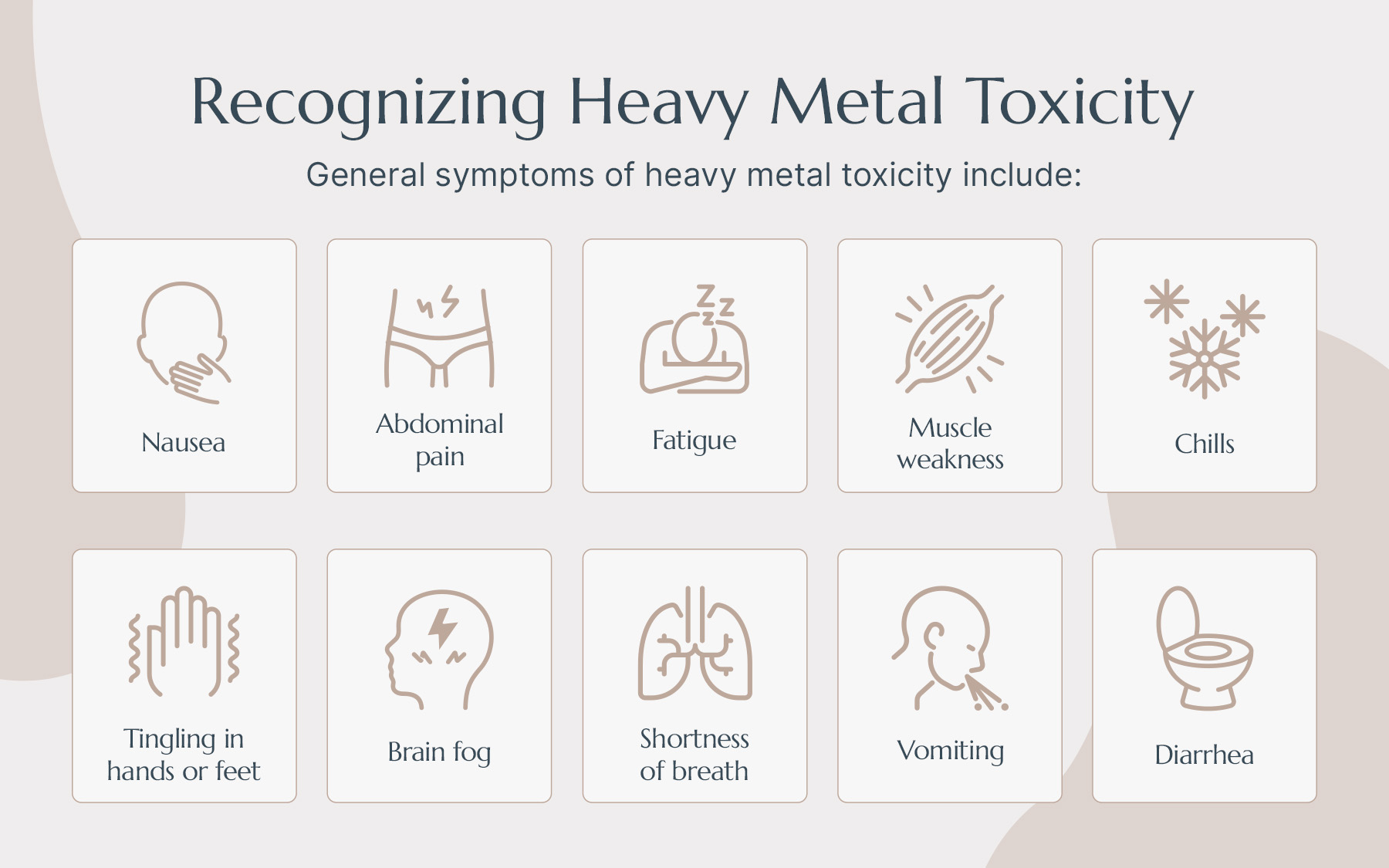
Unlike many toxins that your body can eliminate quickly, heavy metals are generally eliminated slowly, causing them to accumulate in soft tissues and organs over time. Heavy metals disrupt how cells function and can damage vital organs like the brain, kidneys and liver.
Heavy metal toxicity refers to the harmful health effects resulting from the accumulation of heavy metals. Symptoms may go unrecognized because they can be vague or mimic other health conditions. They vary depending on the amount of exposure and the type of metal. For example, chronic lead exposure can lead to abdominal pain, depression and forgetfulness, while chronic arsenic toxicity can cause skin changes and cancer.
General symptoms of heavy metal toxicity include:
- Nausea
- Abdominal pain
- Fatigue
- Muscle weakness
- Chills
- Tingling in hands or feet
- Brain fog, memory issues or behavioral changes
- Shortness of breath
- Vomiting
- Diarrhea
The good news is, it’s possible to remove heavy metals from your body and prevent harm with proper treatment.
Testing for Heavy Metal Toxicity
If you suspect you have heavy metal toxicity, you must first get tested to identify the specific type of metal and the exact amount present in your system.
The type of test you’ll need mainly depends on the metal being tested and the exposure duration. Most heavy metals can be identified with a urine sample. Urine tests show which metals your kidneys are excreting. A health care professional can determine whether you’ve been chronically exposed to the particular metal using urine test results.
A urine test is often ordered alongside a blood test for a comprehensive view of potential toxicity. Blood samples can show which metals are currently circulating in your bloodstream, indicating recent or ongoing exposure.
You can be tested for various metals simultaneously. Heavy metal panels typically test for lead, mercury, arsenic and cadmium.
Treatment Options for Heavy Metal Removal
Treating heavy metal exposure usually involves preventing further exposure and aiding the body’s natural elimination process. This entails consuming natural binding agents, like spirulina. It also involves protecting cells from the free radicals generated by heavy metals with antioxidants like vitamin C and vitamin E. It’s important to note that while dietary measures can support general health, they are not a replacement for medically supervised treatment in severe cases.
If heavy metal levels are high, chelation therapy may be recommended. With chelation therapy, you’ll be administered a binding agent, commonly ethylenediaminetetraacetic acid (EDTA) intravenously. EDTA binds to the heavy metals in your body. It then creates a soluble compound that can be excreted. Chelation therapy with EDTA is frequently used to remove lead, cadmium and other toxic metals.
Since chelation therapy can deplete certain nutrients, like calcium and magnesium, you may also need vitamin therapy during treatment. A health care professional can determine the best course of action to treat heavy metal toxicity while supporting your overall health.
Start Protecting Your Health From Heavy Metal Exposure
New Jersey’s industrial history doesn’t mean you have to accept the health effects of heavy metal exposure. If you’re experiencing unexplained chronic fatigue, brain fog, digestive issues or other persistent symptoms, lab testing provides clarity on whether heavy metal toxicity is to blame.
Take the first step with IV Elements. We are ready to address your heavy metal concerns and support your health with functional lab testing, vitamin IV drips and chelation therapy. We’ll customize your treatment plan based on your lab results and health goals.
Our convenient care options make it easier to prioritize your health. Services are available at drip lounges in Hoboken, Asbury Park, and Parsippany-Troy Hills, or through mobile IV therapy that brings treatment directly to your home. Our compassionate and experienced nurses administer every treatment and will ensure you feel comfortable during each session.
Book your appointment today or contact us to learn more.
 Share
Share  Tweet
Tweet  Share
Share  Email
Email