The Magnesium and Vitamin D Connection: Why Vitamin D Alone Isn’t Enough
- June 1, 2026
- Written by : Rebecca LaMarca, MSN, APN-BC, CNS
Most people taking vitamin D supplements don’t know that without adequate magnesium, vitamin D can’t be fully activated. Vitamin D is a powerful nutrient that helps support your bones, immune system, and mood. Across the world, about one billion people are deficient in it, which can cause issues like bone pain, fatigue, and depression. Many people try to treat their vitamin D deficiencies by getting more sunlight (our main source of vitamin D), eating more vitamin D-rich foods (like eggs, cheese, and fatty fish), or taking vitamin D supplements.
These steps can indeed boost your vitamin D levels. But you might still see signs of deficiency if you’re missing another important nutrient: magnesium. Magnesium is a mineral that supports your nerves, muscles, immunity, bones, heart, and liver. Here’s what you should know about the link between magnesium and vitamin D and how you can get more of both nutrients in NJ, NYC, and Philadelphia.
How does vitamin D work?
As mentioned above, the sun is your main source of vitamin D. When the sun’s UVB rays hit your skin, your skin makes vitamin D from cholesterol. You can also get vitamin D from food, oral supplements, or injections. But no matter how you get it, it needs to be converted into its active form. Magnesium plays a key role in the activation process.
Why magnesium matters for vitamin D
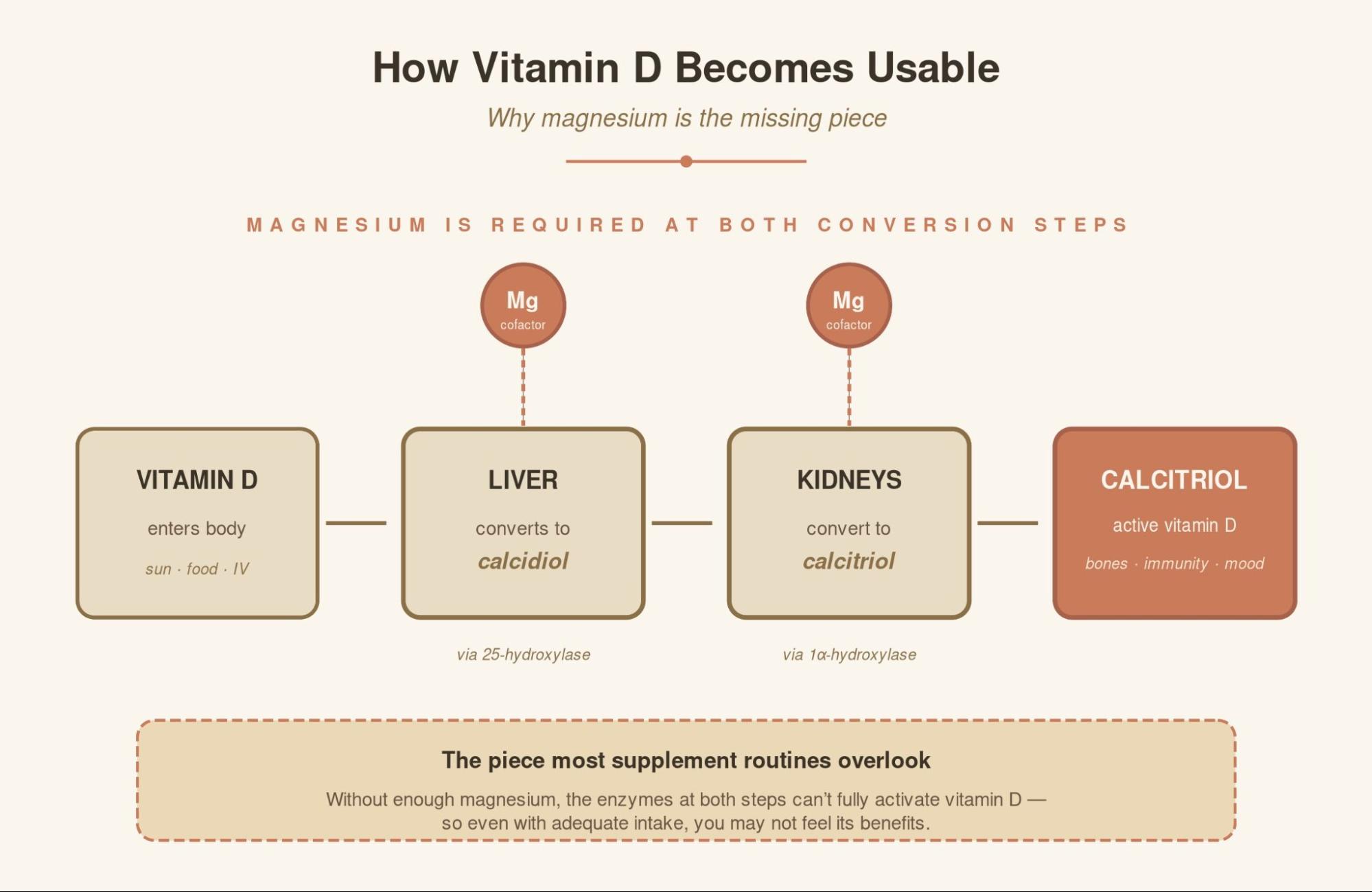
If you take vitamin D without magnesium, the vitamin D won’t work as well. That’s because your body needs magnesium to activate vitamin D. When vitamin D enters your body (whether through sunlight, food, supplement, or injection), it first goes to your liver, where it turns into a substance called calcidiol. Calcidiol is the form of vitamin D that circulates through your blood.
Next, the calcidiol goes to your kidneys. There, it turns into a substance called calcitriol. Calcitriol is your body’s usable form of vitamin D. It acts like a hormone and provides all of vitamin D’s main benefits, like helping your body absorb calcium, which keeps your bones strong, and supporting your immune system.
What happens when you’re low in magnesium AND vitamin D?
You enter a vitamin D-magnesium vicious cycle. If your body lacks magnesium, it won’t be able to turn vitamin D into its usable form as efficiently. This is because magnesium supports the enzymes that turn vitamin D into calcidiol and then calcitriol. These enzymes are called 25-hydroxylase (which turns vitamin D into calcidiol in your liver) and 1α-hydroxylase (which turns calcidiol into calcitriol in your kidneys). If you don’t get enough magnesium, these enzymes can’t work as well, meaning your body will have a harder time converting vitamin D into its usable form.
That means that even if you get plenty of vitamin D through sunlight, diet, or supplements, your body might not have enough of the nutrient’s usable form. To make matters worse, if you’re low in magnesium and keep boosting your vitamin D intake, you may increase your body’s demand for magnesium. That’s because when you take vitamin D, your body looks for magnesium to activate it. Over time, that increased magnesium demand can worsen your magnesium deficiency and make vitamin D activation even more difficult.
Signs of low vitamin D and magnesium
If your vitamin D and magnesium levels are both low, you might notice symptoms like:
- weakness
- low energy
- body aches
- muscle cramps
- bone pain
- uncomfortable joints
- anxiety
- depression
- irritability
- brain fog or trouble concentrating
- difficulty sleeping
- getting sick more frequently or taking longer to get better
Severe deficiencies can also lead to more serious symptoms like irregular heartbeat or seizures. That’s why it’s essential to make sure you’re getting enough magnesium and vitamin D at the same time.
If you notice any of these symptoms, talk to your doctor right away.
How much magnesium do I need to activate vitamin D?
According to the National Institutes of Health, most healthy adults need between 310 and 420 mg of magnesium per day. This amount is usually enough to activate healthy levels of vitamin D. We can help you figure out your specific vitamin D needs through our functional lab testing.
How can I get more magnesium?
At IV Elements, our certified nurses offer personalized magnesium boosters to help you quickly reach healthy levels. You can also raise your magnesium levels over time by taking oral supplements or eating magnesium-rich foods such as:
- leafy greens like spinach and kale
- nuts and seeds
- legumes like black beans, lentils, and chickpeas
- whole grains like brown rice, oats, and whole wheat bread
How do magnesium booster shots work?
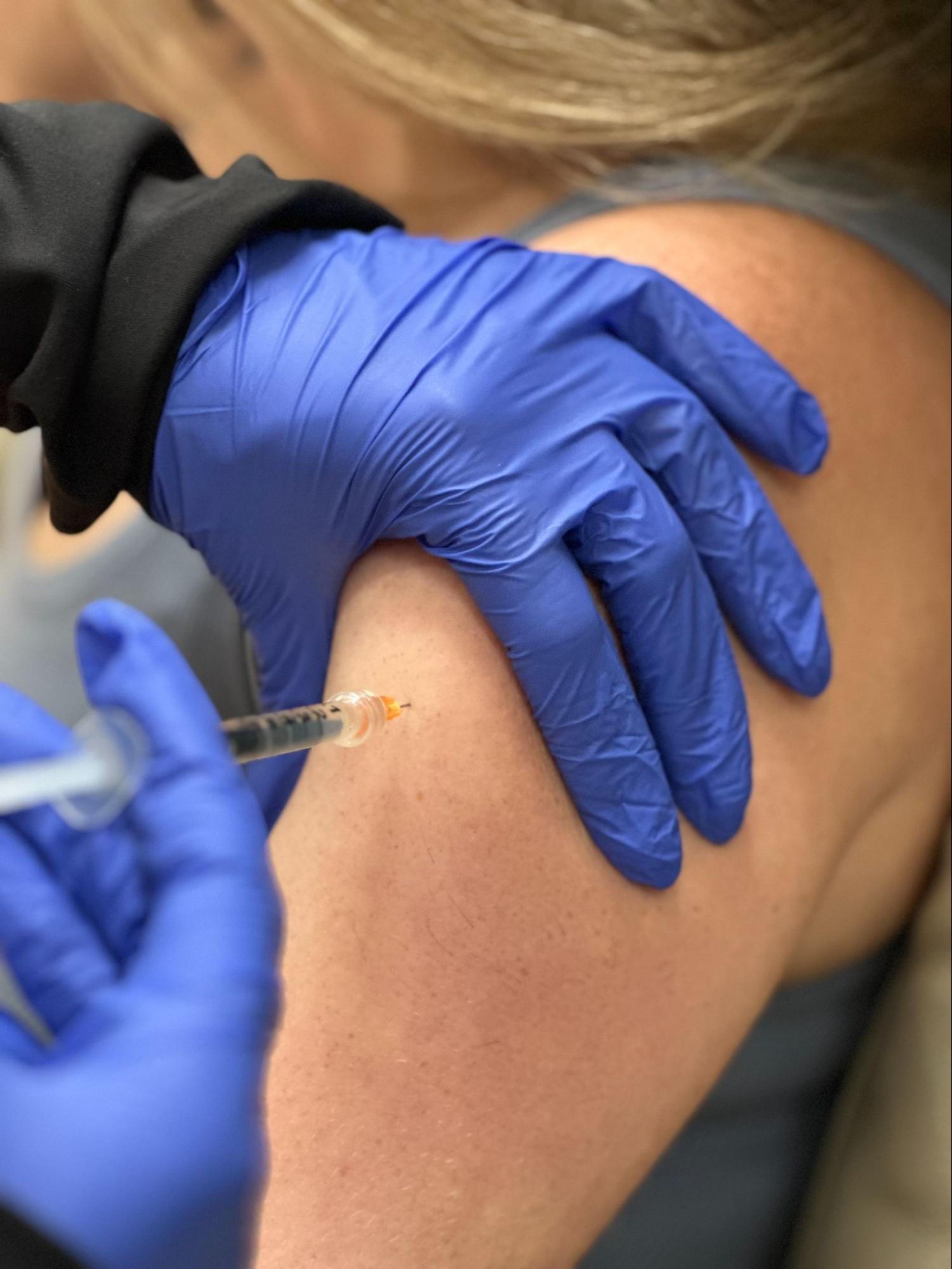
During a magnesium booster shot, our nurses will inject the nutrient into your body via IV or intramuscular injection. The magnesium directly enters your bloodstream, bypassing your digestive system so your levels rise fast. The magnesium can then immediately start supporting your nerves, muscles, heartbeat, and other functions.
Some people feel a warm or flushing sensation while getting injected. Also, once the injection’s over, you might notice side effects like:
- nausea
- dizziness
- low blood pressure, which could make you feel faint
- some irritation or sensitivity around the injection site
These side effects are usually pretty mild. They should go away within a couple hours or days, and you can help manage them by taking it easy, drinking lots of water, and eating healthy foods. If they don’t go away or if you notice more serious side effects, you should seek medical care right away.
Should I add a vitamin D booster?
Since magnesium and vitamin D work together, it can be a great idea to boost both nutrients at the same time. If you test your levels and find that both nutrients are low, you can get a magnesium and vitamin D booster at the same time for maximum health benefits.
Can I get magnesium and vitamin D together as an IV in New Jersey?
Yes. If you’re searching for a “vitamin D and magnesium IV near me,” visit IV Elements. Our experienced team offers personalized IVs at our drip lounges in Hoboken, Asbury Park, Parsippany, and Marlton. We also offer convenient in-home injections to boost your vitamin D and magnesium in New Jersey, NYC, Philadelphia, and Bucks County!
Replenish your body with magnesium and vitamin D at IV Elements
When you’re ready to get your magnesium and vitamin D booster shot in NJ, NYC, or Philadelphia, turn to IV Elements. Our certified team is committed to helping you find your ideal IV treatment plan. As proud members of the Physicians’ Association for Anthroposophic Medicine (PAAM), Institute of Functional Medicine (IFM), and Society for Integrative Oncology (SIO), we offer micronutrient testing so you can learn more about how much vitamin D and magnesium you need.
Whether you schedule your IV in your home or at one of our calming drip lounges, our nurses will keep you comfortable as you journey toward your wellness goals. Explore all of our IV vitamin treatments, and book your booster shots today!
Frequently Asked Questions
Which comes first — vitamin D or magnesium?
Whether you take vitamin D or magnesium first, the absorption process is the same: the vitamin D first goes into your liver, where the magnesium helps convert it into a substance called calcidiol. Then, the calcidiol goes to your kidneys, where it turns into a substance called calcitriol, which is the body’s usable form of vitamin D.
Does taking vitamin D without magnesium work?
While you can technically take vitamin D without magnesium, the vitamin D won’t work as well. That’s because magnesium helps convert vitamin D into its usable form (known as calcitriol). When you don’t have enough usable vitamin D, you might not see the nutrient’s benefits, such as stronger bones and a more balanced immune system. You may also notice signs of low vitamin D like fatigue and anxiety.
What are the signs of low magnesium and vitamin D at the same time?
You might notice symptoms like tiredness, weakness, muscle cramps, bone pain, and mental health symptoms like anxiety, depression, irritability, and brain fog.
Is it better to get vitamin D and magnesium by IV or oral supplement?
The certified team at IV Elements offers vitamin D testing. If your vitamin D or magnesium deficiency is really severe, you might want to go with an IV. That’s because IVs can raise your blood levels of both nutrients more quickly than oral supplements.
Can I get a vitamin D and magnesium injection at home in NJ?
Yes! The certified nurses at IV Elements offer in-home vitamin D and magnesium boosters across New Jersey. Our mobile service also covers NYC, Philadelphia, and Bucks County, PA.
References
- Cleveland Clinic. (2022, August 2). Vitamin D deficiency: Causes, symptoms & treatment. Cleveland Clinic. https://my.clevelandclinic.org/health/diseases/15050-vitamin-d-vitamin-d-deficiency
- DiNicolantonio, J. J., & O’Keefe, J. H. (2021). Magnesium and vitamin D deficiency as a potential cause of immune dysfunction, cytokine storm and disseminated intravascular coagulation in COVID-19 patients. Missouri Medicine, 118(1), 68. https://pmc.ncbi.nlm.nih.gov/articles/PMC7861592/
- Al-Ghamdi, S. M. G., Cameron, E. C., & Sutton, R. A. L. (1994). Magnesium deficiency: Pathophysiologic and clinical overview. American Journal of Kidney Diseases, 24(5), 737–752. https://doi.org/10.1016/s0272-6386(12)80667-6
- National Institutes of Health. (2022). Magnesium. National Institutes of Health. https://ods.od.nih.gov/factsheets/Magnesium-HealthProfessional/
 Share
Share  Tweet
Tweet  Share
Share  Email
Email