Are Vitamin D Shots Right For You?
- October 2, 2024
- Written by : Rebecca LaMarca, MSN, APN-BC, CNS
Everyone needs vitamin D to stay healthy. Many people get enough of this nutrient from sunlight, vitamin D-rich foods, and oral supplements. But if you’re deficient in vitamin D, these sources might not cut it.
About 35% of U.S. adults have vitamin D deficiency. While it can affect anyone, it’s more common in people older than 65 and people with darker skin. You’re also more likely to be deficient if you have certain health conditions, take certain medications, or recently had weight loss surgery.
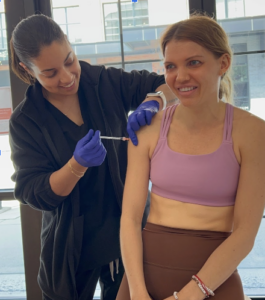
If you struggle to get enough vitamin D with lifestyle changes or supplements, vitamin D shots might be just what you need. During a vitamin D shot, a healthcare professional injects the nutrient into your muscle. This strategy can make it much easier for your body to absorb vitamin D and maintain healthy levels over time. Here’s how to determine if you need a shot and where to find vitamin D injections in NJ, NYC, Bucks County, and Philadelphia.
Do I need a vitamin D shot?
A vitamin D shot may be right for you if you have symptoms of vitamin D deficiency. The most common signs include:
- fatigue
- trouble concentrating
- irritability
- depression or other mood changes
- muscle weakness, cramps, or aches
- bone pain
- hair thinning or loss
If you have low vitamin D, you might first turn to oral supplements. These pills can help, but many New Jersey, New York, and Pennsylvania residents don’t see their levels truly improve until they try injections.
Are injections better than oral vitamin D?
Studies show that both oral and injectable vitamin D supplements can effectively treat deficiencies. However, some research suggests that injections make it easier to get more vitamin D. For example, in a 2024 study, people who got monthly vitamin D injections maintained consistently higher levels of the nutrient compared to those taking weekly or even daily oral supplements.
That’s not because injections cause a stronger initial burst of vitamin D; pills actually get absorbed more quickly and provide a faster boost in blood levels at first. But injections create more sustained blood levels over time. One injection usually contains about 300,000 IU of vitamin D. This dose slowly releases into the bloodstream, acting as a steady daily dose that equals about 3,000 IU per day over 3 months and about 1,500 IU per day over 6 months.
In a 2017 study, people who received injections and those who took oral supplements both reached similar vitamin D levels by 6 weeks, about 20 ng/mL. But at 12 weeks, those who got injections reached about 25 ng/mL, and those who took pills dropped to about 17 ng/mL. These findings highlight how injections offer a more steady and sustained dose of the nutrient over time.
Thus, vitamin D injections are often the better choice if you have absorption issues, a severe deficiency, or difficulties adhering to pill schedules. At IV Elements, we offer convenient vitamin D boosters at all of our locations, along with mobile IV therapy services so you can boost your health right at home. Serving residents across New Jersey, New York City, Philadelphia, and Bucks County, our personalized injections can keep your vitamin D levels steady thanks to improved absorption and more reliability.
Improved absorption
Vitamin D is fat soluble, which means your body absorbs it best when you eat it with fats like eggs, oils, or dairy. But some health conditions interfere with your body’s ability to absorb vitamin D:
- Celiac disease: In untreated celiac disease, gluten can trigger an immune response that damages your small intestine and keeps it from properly absorbing nutrients like vitamin D.
- Cystic fibrosis: This condition can hinder the absorption of fat-soluble vitamins like vitamin D by blocking pancreatic ducts with a thick mucus that stops essential digestive enzymes from reaching the small intestine.
- Crohn’s disease: Crohn’s disease can prevent the small intestine from effectively absorbing vitamin D due to chronic inflammation and, in some cases, surgical removal of parts of the small intestine.
- Ulcerative colitis: This disease can contribute to lower vitamin D levels because of colon inflammation, decreased sun exposure, dietary changes during flareups, and treatment with corticosteroids, which are medications that may disrupt vitamin D metabolism.
- Kidney disease: Kidney disease can reduce active vitamin D levels by disrupting the kidneys’ ability to turn vitamin D into its active form (calcitriol).
- Liver disease: This condition can impair the liver’s ability to turn vitamin D into its main transport form in the bloodstream and hinder bile production, which is necessary for absorbing fat-soluble vitamins like vitamin D.
These conditions can cause your vitamin D levels to stay low no matter how many supplements you take. In that case, a vitamin D injection can be the perfect way to boost your levels without worrying about absorption. That’s because the nutrient is injected directly into your muscle, meaning it completely bypasses your digestive system.
Another health condition that can affect vitamin D absorption is obesity. When you have extra fat tissue, it may store too much vitamin D, meaning you won’t have enough of the nutrient in your bloodstream.
You might also have trouble absorbing vitamin D if you treat your obesity with gastric bypass surgery. This surgery makes it so the part of your small intestine that absorbs vitamin D is bypassed, making it harder for your body to absorb the nutrient from food. In this situation, vitamin D injections in NJ, NYC, Bucks County, and Philadelphia can help you stay healthy as you recover from surgery.
More reliability
If your vitamin D deficiency is severe, you’ll need a reliable, steady dose. Getting a vitamin D shot allows you to maintain healthy vitamin D levels without having to remember to take a pill every day. Forgetting even a couple doses or not taking your pill at the right time can have serious risks, especially if you have a severe deficiency.
Injections also make it easier to get higher doses of vitamin D. These doses are often essential for severe deficiencies. If you go with pills, you’ll probably need to take very large doses for weeks to keep your levels steady. On the other hand, a single injection can deliver a high dose that your body steadily absorbs over time. That means you can rest easy knowing your deficiency is under control. To start your journey, visit IV Elements at one of our drip lounges in Hoboken, Asbury Park, Parsippany, or Marlton, or schedule a mobile appointment.
Other vitamin D shot benefits
Vitamin D shots don’t only offer benefits when compared to supplements; they also provide advantages in other ways.
For example, they can help you avoid excess sun exposure. Sunlight is our main source of vitamin D. In fact, you face a much higher risk of deficiency if your body struggles to absorb vitamin D from the sun because:
- you work indoors, wear sunscreen all the time, or live somewhere with very little sunlight
- you have darker skin, as the pigment melanin can hinder your skin’s ability to produce vitamin D from sunlight
- you’re over 65, as your ability to synthesize vitamin D lessens as you age
However, too much sun can wreak havoc on your skin. The UV rays may disrupt your skin’s appearance and growth, damaging the DNA in skin cells. When you get vitamin D injections, you can keep your levels consistent without spending too much time in the sun. That means shots help lower your risk of sun damage, including sunburn, premature aging, and skin cancer.
Vitamin D shots can also ease the anxiety of keeping up with a vitamin D-rich diet. While these diets are important for those with deficiencies, injections help ensure that your body has a stable supply of the nutrient even on days where your diet isn’t perfect.
Where can I get a vitamin D injection or shot near me?
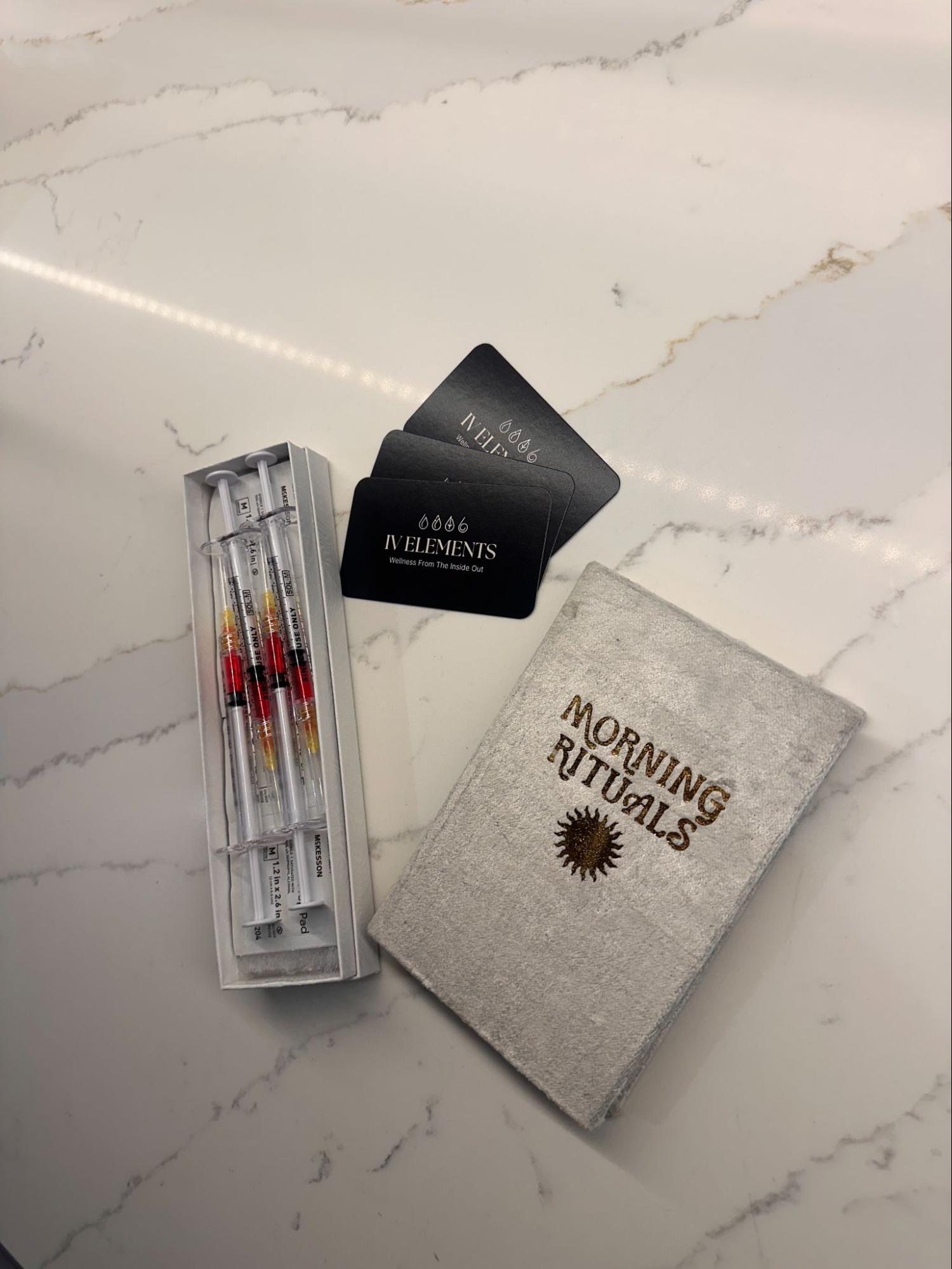
When you’re searching for “vitamin D shots near me,” IV Elements has you covered. We offer personalized vitamin D injections in NJ, NYC, Bucks County, and Philadelphia so you can reliably manage your deficiency. Our experienced team can help you determine the ideal dose and schedule based on your health, goals, and current vitamin D levels.
Schedule your vitamin D injection in NJ, NYC, Bucks County, and Philadelphia
If you’re ready to boost your vitamin D, reach out to IV Elements. Alongside vitamin boosters, our experienced team also provides IV therapy treatments at each of our locations and even from the comfort of your own home through our mobile service. These treatments can further enhance your health as you recover from your deficiency. Contact us to learn more about our vitamin D injections and book your appointment today!
Here are both code blocks with the top 5 questions — I picked the ones most relevant to your IV therapy business (kept the injections vs. supplements question since that drives conversions, and dropped “What foods are highest” and “Can you take too much” which are less aligned with your services): The 5 questions: What does vitamin D do for the body? What are the symptoms of vitamin D deficiency? How much vitamin D do I need daily? Can you get enough vitamin D from sunlight alone? Are vitamin D injections better than oral supplements? If you’d rather swap any of these out, tell me which and I’ll regenerate. Code Block 1: HTML Accordion — paste in the Code tab of your post: html
Frequently Asked Questions
How often do you need vitamin D injections?
It depends on your situation. If you have a severe deficiency, you might need an injection every couple weeks to once a month. To maintain healthy levels, you might only need booster shots every three to six months. The experienced team at IV Elements, led by a board-certified advanced practice nurse, can help you figure out what schedule works best for you. We offer the shots at our drip lounges in Hoboken, Asbury Park, Parsippany, and Marlton and as a convenient mobile service throughout New Jersey, NYC, Philadelphia, and Bucks County.
Are vitamin D injections safe?
They’re usually very safe, as long as you’re monitored by a healthcare professional. They can perform blood tests to make sure you don’t get too much vitamin D, which can cause side effects like nausea and vomiting, fatigue, decreased appetite and weight loss, and kidney problems.
Who is at risk of low vitamin D?
Vitamin D injections can be ideal for people with low vitamin D. You’re more likely to have low vitamin D if:
- you have a condition that affects your body’s ability to absorb vitamin D, such as celiac disease, certain types of liver disease, or obesity
- you have trouble absorbing vitamin D from sunlight due to little sun exposure, darker skin, or older age
- you have a condition that affects vitamin D absorption, like celiac disease, Crohn’s disease, or liver disease
- you’ve recently had bariatric surgery
What are the signs you need vitamin D injections?
You might need vitamin D injections if you show signs of vitamin D deficiency. These signs include fatigue, muscle weakness, bone pain, hair thinning or loss, mood changes, difficulty concentrating, and irritability.
Why am I always low in vitamin D?
If you’ve tried to get more vitamin D from sunlight, food, or oral supplements, you might have an underlying condition that affects your body’s ability to absorb it. These conditions include:
- celiac disease
- cystic fibrosis
- Crohn’s disease
- obesity
Vitamin D injections can help restore normal vitamin D levels because they deliver the nutrient right into your muscle. That means it doesn’t have to be absorbed in your digestive system.
REFERENCES
- Office of Dietary Supplements. (2025). Vitamin D. National Institutes of Health. https://ods.od.nih.gov/factsheets/VitaminD-HealthProfessional/
- Cleveland Clinic. (n.d.). Vitamin D deficiency. https://my.clevelandclinic.org/health/diseases/15050-vitamin-d-vitamin-d-deficiency
- Agarwal, N., Lohani, P., & Singh, S. (2024). Oral vs. injected: Which vitamin D boost works best for low levels? Journal of Basic and Clinical Physiology and Pharmacology. https://doi.org/10.1515/jbcpp-2024-0018
- Farooqui, K., Gupta, N., Batra, C., Marwaha, R., & Mithal, A. (2017). Effect of oral versus intramuscular vitamin D replacement in apparently healthy adults with vitamin D deficiency. Indian Journal of Endocrinology and Metabolism, 21(1), 131. https://doi.org/10.4103/2230-8210.196007
- Di Stefano, M., Miceli, E., Mengoli, C., Corazza, G. R., & Di Sabatino, A. (2023). The effect of a gluten-free diet on vitamin D metabolism in celiac disease: The state of the art. Metabolites, 13(1), 74. https://doi.org/10.3390/metabo13010074
- Chesdachai, S., & Tangpricha, V. (2016). Treatment of vitamin D deficiency in cystic fibrosis. The Journal of Steroid Biochemistry and Molecular Biology, 164, 36–39. https://doi.org/10.1016/j.jsbmb.2015.09.013
- Vernia, F., Valvano, M., Longo, S., Cesaro, N., Viscido, A., & Latella, G. (2022). Vitamin D in inflammatory bowel diseases: Mechanisms of action and therapeutic implications. Nutrients, 14(2), 269. https://doi.org/10.3390/nu14020269
- Szymczak-Tomczak, A., Ratajczak, A. E., Kaczmarek-Ryś, M., Hryhorowicz, S., Rychter, A. M., Zawada, A., Słomski, R., Dobrowolska, A., & Krela-Kaźmierczak, I. (2022). Pleiotropic effects of vitamin D in patients with inflammatory bowel diseases. Journal of Clinical Medicine, 11(19), 5715. https://doi.org/10.3390/jcm11195715
- Andress, D. L. (2006). Vitamin D in chronic kidney disease: A systemic role for selective vitamin D receptor activation. Kidney International, 69(1), 33–43. https://doi.org/10.1038/sj.ki.5000045
- Hundt, M., Basit, H., & John, S. (2022). Physiology, bile secretion. StatPearls Publishing. https://www.ncbi.nlm.nih.gov/books/NBK470209/
- National Institutes of Health. (2014, July). Sun and skin. NIH News in Health. https://newsinhealth.nih.gov/2014/07/sun-skin
 Share
Share  Tweet
Tweet  Share
Share  Email
Email