NAD Therapy for Opiate Detox
- August 22, 2023
- Written by : Rebecca LaMarca, MSN, APN-BC, CNS
Opioid misuse wreaks havoc on your cells. That’s because it can cause oxygen deprivation, disrupt mitochondrial energy production, and increase oxidative stress. In opioid recovery, cellular damage can worsen withdrawal symptoms like fatigue, anxiety, trouble sleeping, and physical aches. Here’s what current research suggests about how NAD may support recovery — and the role BR+ NAD therapy plays at IV Elements.
This content is for educational purposes only and is not medical advice. Nicotinamide adenine dinucleotide therapy is not FDA-approved for opioid use disorder or addiction treatment. Always consult a qualified healthcare provider before starting any new treatment.
What is NAD, and why does opioid use deplete it?
Nicotinamide adenine dinucleotide, or NAD, is a coenzyme found in all of your body’s cells. It plays a key role in energy production by helping transfer electrons during metabolism. In addition, it supports DNA repair, cell signaling, and cellular processes involved in aging and stress responses.
As you get older, your NAD levels naturally decline. They can decline even faster due to unhealthy lifestyle factors, including opioid use.
Three reasons opioid use depletes NAD:
- Oxidative stress
- Mitochondrial dysfunction
- Increased enzyme activity (PARPs, CD38)
Regular opioid use has been linked with oxidative stress (an imbalance of free radicals and antioxidants) and mitochondrial dysfunction (problems with the cells’ “power plants” that help produce energy). These stressors can trigger the activity of enzymes that use up NAD, including PARPs (which use NAD for DNA repair) and CD38 (which uses NAD for immune signaling).
Opioids may also have negative effects on your metabolism and hormones that might make it harder for cells to recycle NAD. Together, increased usage and decreased recycling can lead to lower NAD levels over time.

How BR+ NAD IV therapy may support cellular recovery during opioid recovery
Some scientists think BR+ NAD IV therapy may support cellular replenishment during recovery because NAD is a key player in DNA repair mechanisms and cellular health. By providing cells with the necessary resources for repair and rejuvenation, BR+ NAD therapy may support the body’s natural repair processes during recovery.
For example, since NAD is essential for cellular energy production, NAD therapy may support energy metabolism and help ease the extreme fatigue linked with early opioid recovery. It may also help you cope with other opioid withdrawal symptoms, such as:
- brain fog
- trouble sleeping
- mood swings
- anxiety
- irritability
With better-managed withdrawal symptoms, it could be easier to focus on recovery supports like therapy, support groups, and self-care. You might also have fewer opioid cravings. A 2022 study of people in addiction recovery found that NAD infusions were linked with reduced anxiety, depression, and cravings.
NAD vs. BR+ NAD: the difference and why it matters in recovery
NAD therapy only infuses NAD. But BR+ NAD therapy also infuses other nutrients like B vitamins, magnesium, amino acids, and antioxidants. These nutrients can give your body an extra boost of energy and cellular support, which may make it easier to manage withdrawal symptoms compared to NAD alone.
You can learn more about the differences between NAD therapy and BR+ NAD therapy in this guide.
What makes BR+ NAD therapy different from a typical detox?
In a traditional medical detox, doctors focus on safely getting a drug out of your body. Detox typically takes place in a hospital or inpatient addiction treatment facility, where medical professionals closely monitor your symptoms as your body adjusts to the lack of drugs. They may also prescribe medications to ease certain withdrawal symptoms.
In contrast, BR+ NAD therapy is an alternative medicine treatment that takes place in a drip lounge or at your home. It may help your brain and body heal from the substance’s effects by promoting cellular repair after opioid-related damage.
Ultimately, medical detox is about removing harmful substances, while BR+ NAD therapy is about restoring your health — and that’s why NAD can be a powerful complement to (or step after) medical detox.
At IV Elements, we can also support your medical detox by pairing BR+ NAD therapy with glutathione. Glutathione is a powerful, naturally occurring antioxidant made by your liver. It can reduce oxidative stress and support liver function, which may help your body rid itself of harmful substances.
Who is BR+ NAD therapy a good fit for?
BR+ NAD therapy might be right for you if you’re in early recovery and medically stable. That means you have already gone through acute withdrawal, which usually takes place in the first week after you quit opioids. Acute withdrawal can involve intense symptoms like severe vomiting, dehydration, and rapid heart rate. It requires extensive medical supervision and should not be treated with an alternative medicine support option like BR+ NAD therapy.
While BR+ NAD therapy isn’t recommended for people in acute withdrawal, it can be helpful if you’re having post-acute withdrawal symptoms (PAWS). These symptoms often start a week or two after you quit opioids. They’re usually milder symptoms than you’ll get during the acute phase. For example, you might notice fatigue and irritability.
However, you should avoid BR+ NAD therapy if you:
- are pregnant or breastfeeding
- have a known allergy to NAD products or IV drip ingredients
- have severe liver, kidney, or heart disease
- have an active cancer
- have an active infection
- are deficient in certain enzymes, including G6PD
You can learn more about the safety of BR+ NAD therapy here.
Always consult your doctor before starting BR+ NAD therapy.
Where does NAD therapy fit in a comprehensive opioid recovery plan?
Since NAD therapy has not been approved by the FDA to help manage opioid addiction, it should only be used as part of an existing recovery program that includes evidence-based treatments such as:
- Behavioral therapy, in which a mental health professional helps you change unhealthy thoughts and behaviors related to your addiction
- Medication-assisted treatment (MAT), in which you are prescribed medications like buprenorphine, methadone, or naltrexone to ease opioid cravings and withdrawal symptoms
When used alongside these treatments, BR+ NAD therapy may help support cellular recovery during withdrawal, making early recovery feel more manageable.
IV Elements recognizes Medications for Opioid Use Disorder (MOUD), including methadone, buprenorphine, and naltrexone, as evidence-based treatments that support recovery from opioid use disorder. MOUD can reduce cravings, ease withdrawal, and lower the risk of relapse and overdose.

What can you expect during a BR+ NAD session and protocol?
During a BR+ NAD session at IV Elements, one of our board-certified nurses will first gather your health history and discuss your treatment goals. They will then place your IV, usually in your arm or hand, and start your drip. The infusion usually lasts between 2 and 4 hours. To learn more about what your session will look like, see this guide.
The frequency of your sessions will depend on your health and provider. At IV Elements, we offer a 10-day program specifically for opioid recovery. Each day, you’ll get 750mg BR+ NAD over 5 hours. This program offers a steady surge of NAD and nutrients during the early days of withdrawal.
Most clients combine this protocol with their existing recovery program for a wraparound approach.
Always consult your doctor before choosing an IV therapy protocol.
Where can I get BR+ NAD therapy in New Jersey?
For NAD recovery support in New Jersey, visit an IV Elements drip lounge in Hoboken, Asbury Park, Parsippany, or Marlton. Our compassionate nurses also offer in-home BR+ NAD therapy so you can get your infusions right at home, helping you stay comfortable during withdrawal. Our mobile service also provides NAD opioid recovery in NYC and Philadelphia.
Enhance your opioid recovery plan with BR+ NAD therapy
If you or someone you love is recovering from opioid addiction, the clinical team at IV Elements would be honored to support your journey. Led by board-certified nurse practitioner Rebecca LaMarca, we attended the virtual Springfield Wellness Center 2020 NAD+ Brain Restoration Summit, where scientists, physicians, and practitioners explored the latest research on BR+ NAD for addiction recovery.
We offer comprehensive consultations to discuss your current health status, recovery goals, and whether you’re a good candidate for BR+ NAD therapy in NJ, NYC, or PA. As proud members of the Physicians’ Association for Anthroposophic Medicine (PAAM) and Institute of Functional Medicine (IFM), we’re dedicated to providing evidence-based, integrative treatment designed just for you. Book your consultation today!
FAQ
What is the BR+ NAD protocol?
The BR+ NAD protocol infuses NAD along with other nutrients like B vitamins, magnesium, amino acids, and antioxidants. Because of the added nutrients, it might make it easier to recover from certain health conditions, such as opioid addiction, compared to NAD therapy alone.
Who shouldn’t get BR+ NAD therapy?
You shouldn’t get BR+ NAD therapy if you’re experiencing acute withdrawal (which usually happens within the first week of quitting a substance), if you’re pregnant or breastfeeding, or if you have certain health conditions, including:
- a known allergy to NAD products or IV drip ingredients
- severe liver, kidney, or heart disease
- active cancer
- active infection
- G6PD deficiency
For more information, talk to your healthcare provider.
How much does BR+ NAD therapy cost in New Jersey?
The cost depends on factors like the number of sessions you get and the clinic you use. You can explore IV Elements’ BR+ NAD therapy pricing here.
How do you talk to your care team about adding NAD therapy?
Explain why you’re interested in the therapy, and ask whether your care team recommends it based on factors like your medical history, withdrawal symptoms, and any medications you take. If your care team thinks you’re a good candidate, they can help you figure out how many sessions you should get and when you should get them.
References:
- What is NAD Therapy? | NAD Benefits, Uses and Treatments: https://ivelements.net/blog/what-is-nad-therapy
- Boost Energy & Mitochondrial Function with BR + NAD Therapy: https://ivelements.net/nad-therapy
- NAD+ metabolism and its roles in cellular processes during ageing (Covarrubias et al., 2020): https://doi.org/10.1038/s41580-020-00313-x
- Sobriety and Satiety: Is NAD+ the Answer? (Braidy et al., 2020): https://doi.org/10.3390/antiox9050425
- Aryl hydrocarbon receptor (AHR) functions in inflammation and NAD+-dependent metabolic adaptation (Bock, 2021): https://doi.org/10.1007/s00204-021-03134-9
- BR+ NAD vs. NAD+ Therapy | Brain Restoration NAD Therapy: https://ivelements.net/blog/br-nad-vs-nad-therapy
- NAD+ and Enkephalinase Inhibition Infusions in SUD (Blum et al., 2022): https://doi.org/10.2174/2666082218666220527114427
- Schedule Your IV Therapy At-Home | Book IV Drip Now: https://ivelements.net/book-now-1
 Share
Share  Tweet
Tweet  Share
Share  Email
Email 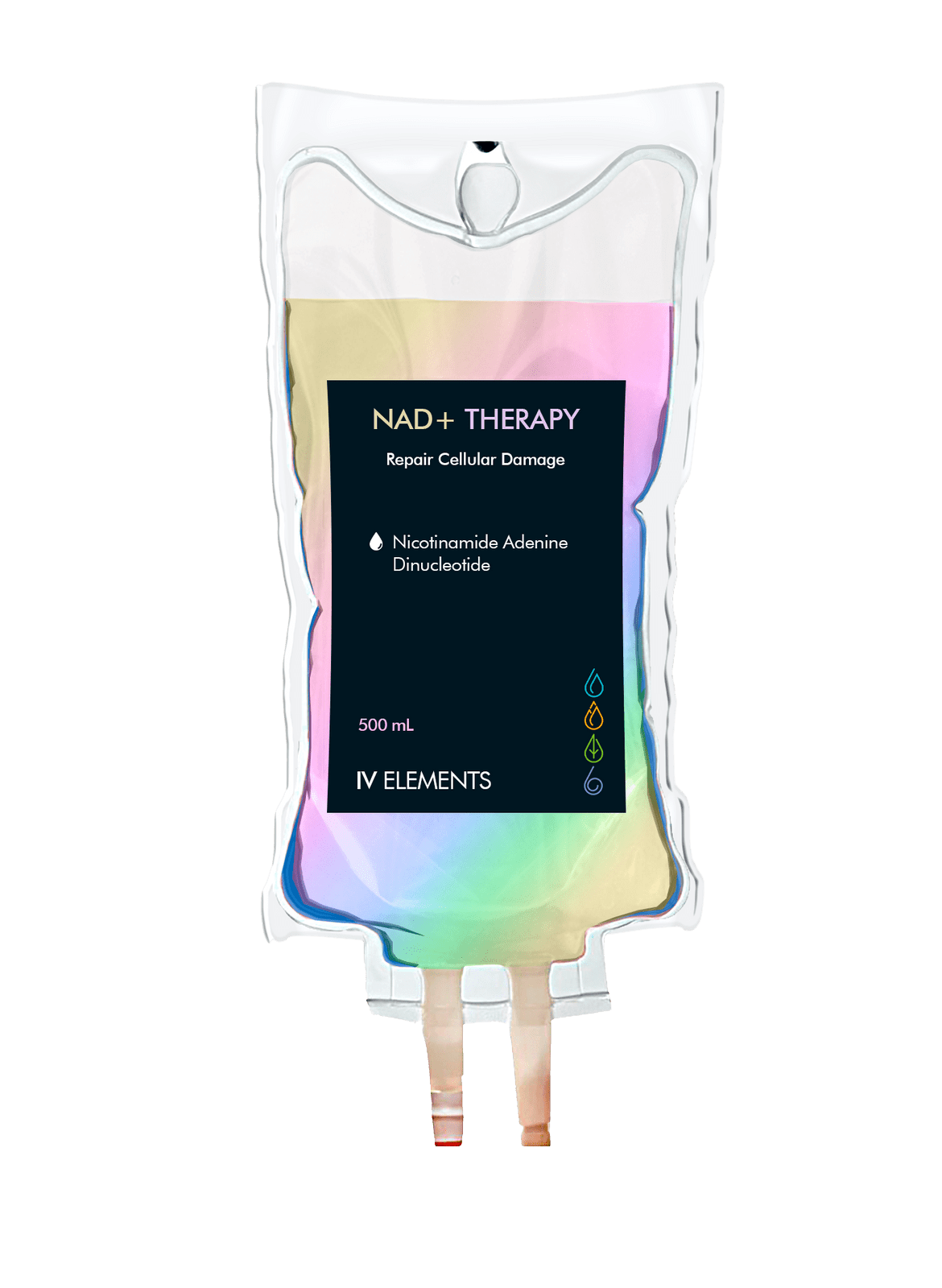
BR+ NAD IV Therapy and Treatment
Studies have shown that NAD+ can help those battling from an array of aging and chronic conditions in the human body and brain, and can also be the light at the end of the tunnel for many people suffering from opiate, alcohol and other drug addictions.