Everything You Need to Know About Resveratrol IV Therapy
- October 22, 2026
- Written by : Rebecca LaMarca, MSN, APN-BC, CNS
Key Takeaways
- Resveratrol is a plant polyphenol found in grapes, berries, red wine, and peanuts with antioxidant and anti-inflammatory properties.
- IV resveratrol bypasses the gut and liver, so more of the compound reaches your bloodstream than oral supplements can deliver.
- Research suggests resveratrol may support cardiovascular, metabolic, and brain health, and may be used alongside conventional cancer treatment.
- IV Elements offers resveratrol IV therapy at four flagship NJ lounges (Hoboken, Asbury Park, Parsippany, Marlton) and through mobile service across NJ, NYC, Philadelphia, and Bucks County, PA.
- Resveratrol is not safe for everyone. We screen every client with a pre-treatment consultation and labs before the first infusion.
Looking for an integrative way to support inflammation, aging, heart health, or brain health? Resveratrol IV therapy may be worth exploring. This infusion delivers resveratrol, an antioxidant compound found in foods like grapes and berries, directly into your bloodstream. At IV Elements, every resveratrol treatment is personalized to the client. Below is what to know about resveratrol IV therapy benefits, uses, and treatment protocols before you book your first session.
What is resveratrol?
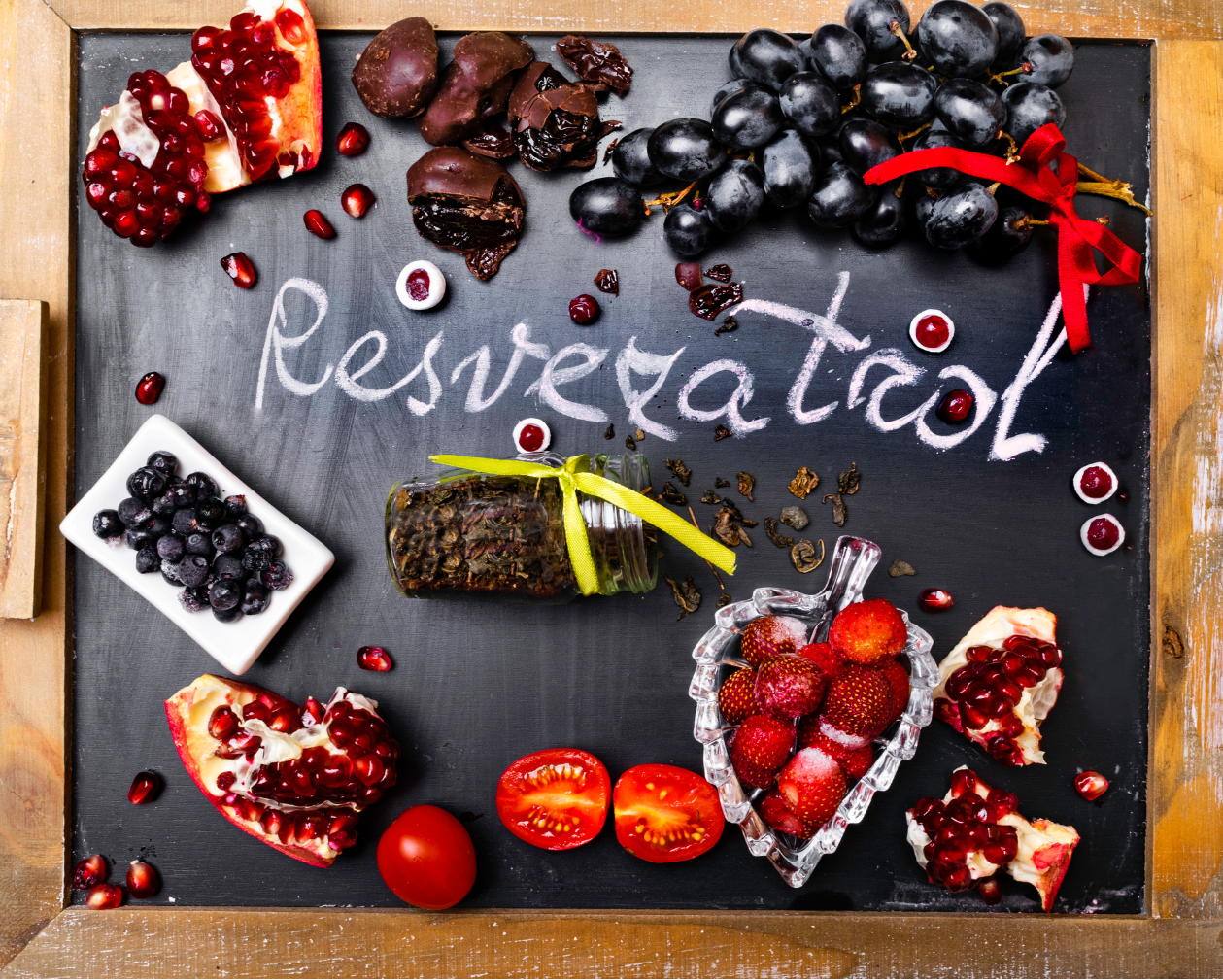
Resveratrol is a plant compound that appears in foods and drinks like red wine, berries, grapes, and peanuts. It acts as a powerful antioxidant and belongs to a group of plant chemicals known as polyphenols. These compounds have both antioxidant and anti-inflammatory properties, which is why resveratrol has been studied for potential effects on inflammation, metabolic health, premature aging, cardiovascular problems, and cognitive decline.1
How does resveratrol IV therapy work?
Research suggests that resveratrol may work by influencing proteins such as SIRT1 (a sirtuin) and AMPK (a protein kinase), which play a role in cellular energy, metabolism, and mitochondrial function. It may also increase nitric oxide (a compound linked with cardiovascular health), support antioxidant defenses, and reduce inflammatory signaling. These effects may have positive implications for cardiovascular, metabolic, and cellular health, though more human studies are needed.2
According to research led by Harvard professor David Sinclair, resveratrol may also influence sirtuin-related pathways linked with longevity. Lab and animal studies suggest these pathways may have beneficial effects on cellular metabolism and mitochondrial function, but more research is needed to determine if resveratrol promotes longevity in humans.3
What is the difference between IV and oral resveratrol?
The main difference is bioavailability. Oral resveratrol supplements must first be processed by the gut and liver, which leaves only a small fraction of active resveratrol available to the bloodstream.4 Resveratrol IV therapy delivers the compound straight into the bloodstream, allowing a much larger amount to circulate through the body. Higher blood levels may make it easier to experience resveratrol’s potential health benefits.
| Feature | Oral Resveratrol | IV Resveratrol |
|---|---|---|
| Delivery route | Capsule or tablet | Intravenous infusion |
| Bioavailability | Low (processed by gut and liver) | High (bypasses first-pass metabolism) |
| Time to effect | Hours to days of consistent dosing | Immediate systemic availability |
| Clinical supervision | Over the counter | Administered by ER-trained nurses |
| Session length | N/A | 30 to 60 minutes |
What are the benefits of resveratrol IV therapy?
Resveratrol IV therapy has been studied for its potential to reduce inflammation; support metabolic, cardiovascular, and brain health; and complement cancer care when used alongside conventional treatments.
May reduce inflammation
Research suggests resveratrol may lower systemic inflammatory biomarkers, which is why many integrative practitioners consider it for clients navigating chronic inflammation and inflammatory conditions.9
May support metabolic health
By influencing cellular energy production, resveratrol may support insulin sensitivity and glucose control, particularly in people with Type 2 diabetes or metabolic dysfunction.6
May support cardiovascular health
Resveratrol may trigger the release of nitric oxide, a compound that helps blood vessels relax and supports overall blood flow. These effects may support cardiovascular health over time, though more human studies are needed.5
May support brain health
Because it can cross into brain tissue and support circulation, resveratrol has been studied for a potential role in neurodegenerative disease research. However, more human studies are needed to determine if resveratrol IV therapy can meaningfully support cognitive function.7
May support integrative cancer care
In laboratory studies, resveratrol has shown potential to promote cancer cell death and slow tumor growth. More research is needed to determine if the compound can meaningfully support cancer treatment in humans. Resveratrol IV therapy should only be used alongside FDA-approved treatments like chemotherapy and radiation, and only when coordinated with the patient’s oncologist.8
Is resveratrol IV therapy safe?
Resveratrol is generally considered safe for most people when administered by a licensed healthcare provider. Like most treatments, it can have side effects. The most common include:
- Nausea
- Headache
- Stomach pain
- Flushing
- Lightheadedness
- Fatigue
These side effects are typically mild and fade within a few hours. Resveratrol may be less safe for clients taking certain medications, including blood thinners like Warfarin and NSAIDs like Advil, which can increase bleeding and bruising risk. Resveratrol should also be avoided if you have any of the following:
- Bleeding disorders, which raise the risk of bleeding and bruising
- Hormone-sensitive cancers (such as breast, prostate, and ovarian), as resveratrol can mimic estrogen and may stimulate the growth of hormone-sensitive cancer cells
- Pregnancy, as resveratrol may harm a developing fetus
Before your first session, our team conducts a comprehensive consultation with pre-treatment testing to confirm resveratrol is appropriate for you.

Can I get resveratrol IV therapy in NJ?
Yes. IV Elements offers personalized resveratrol IV therapy at our four flagship drip lounges in Hoboken, Asbury Park, Parsippany, and Marlton. We also provide in-home treatments across NJ, NYC, Philadelphia, and Bucks County, PA. Whether in-lounge or mobile, our ER-trained nurses work with each client to craft a customized treatment plan.
What to expect at your resveratrol IV therapy session
At the start of your session, your nurse takes your vitals and makes sure you feel comfortable and relaxed. Next, the IV is inserted and your drip begins. Most sessions last between 30 and 60 minutes, depending on your protocol. Once the session is complete, your nurse checks in on how you are feeling and shares guidance for managing any side effects at home.
Schedule personalized resveratrol IV therapy with IV Elements
Ready to see if resveratrol IV therapy fits your plan? The team at IV Elements is led by Rebecca LaMarca, MSN, APN-BC, CNS, a board-certified nurse practitioner who worked with Dr. Shabbar Danish at the Cancer Institute of New Jersey and trained in Germany in mistletoe, integrative cancer services, and hyperbaric ozone. As members of the Physicians’ Association for Anthroposophic Medicine (PAAM), the Institute for Functional Medicine (IFM), and the Society for Integrative Oncology (SIO), our team provides medical-grade care in a calm, spa-like setting. Visit one of our four flagship New Jersey drip lounges in Hoboken, Asbury Park, Parsippany, or Marlton, or book an at-home session through our mobile service.
Book Your Resveratrol IV Consultation
Four flagship NJ lounges plus mobile concierge across NJ, NYC, Philadelphia, and Bucks County, PA.
Frequently Asked Questions
How much resveratrol should I take?↓
Does resveratrol have side effects?↓
Are there any medication interactions with resveratrol?↓
What foods contain resveratrol?↓
Does resveratrol slow aging?↓
Does resveratrol help with inflammation?↓
Does resveratrol help the heart?↓
Does resveratrol help cancer patients?↓
References
- Salehi, B., et al. (2018). Resveratrol: A Double-Edged Sword in Health Benefits. Biomedicines, 6(3), 91. https://doi.org/10.3390/biomedicines6030091
- Meng, X., et al. (2020). Health Benefits and Molecular Mechanisms of Resveratrol: A Narrative Review. Foods, 9(3), 340. https://doi.org/10.3390/foods9030340
- Baur, J. A., et al. (2006). Resveratrol improves health and survival of mice on a high-calorie diet. Nature, 444(7117), 337-342. https://doi.org/10.1038/nature05354
- Walle, T., et al. (2004). High Absorption but Very Low Bioavailability of Oral Resveratrol in Humans. Drug Metabolism and Disposition, 32(12), 1377-1382. https://doi.org/10.1124/dmd.104.000885
- Raj, P., et al. (2021). A comprehensive analysis of the efficacy of resveratrol in atherosclerotic cardiovascular disease, myocardial infarction and heart failure. Molecules, 26(21), 6600. https://doi.org/10.3390/molecules26216600
- Liu, K., et al. (2014). Effect of resveratrol on glucose control and insulin sensitivity: a meta-analysis of 11 randomized controlled trials. The American Journal of Clinical Nutrition, 99(6), 1510-1519. https://doi.org/10.3945/ajcn.113.082024
- Zhu, L., et al. (2025). Interaction between resveratrol and SIRT1: role in neurodegenerative diseases. Naunyn-Schmiedeberg’s Archives of Pharmacology, 398(1), 89-101. https://doi.org/10.1007/s00210-024-03319-w
- Varoni, E. M., et al. (2016). Anticancer Molecular Mechanisms of Resveratrol. Frontiers in Nutrition, 3. https://doi.org/10.3389/fnut.2016.00008
- Koushki, M., et al. (2018). Effect of Resveratrol Supplementation on Inflammatory Markers: A Systematic Review and Meta-analysis of Randomized Controlled Trials. Clinical Therapeutics, 40(7), 1180-1192. https://doi.org/10.1016/j.clinthera.2018.05.015
 Share
 Tweet
 Share
 Email


