Does NAD IV Therapy Have Side Effects?
- December 7, 2023
- Written by : Rebecca LaMarca, MSN, APN-BC, CNS
If you have a passion for integrative wellness, you’ve probably heard of NAD IV therapy. This infusion treatment boosts NAD+, a coenzyme involved in essential functions like energy production and DNA repair. Some studies have linked it with health benefits like less fatigue, more mental clarity, and reduced signs of aging.
When considering any type of alternative medicine, it’s important to understand possible side effects. Most people tolerate NAD therapy well, but there are still some risks you should be aware of. Here’s what you should know about NAD IV therapy side effects and how the certified nurses at IV Elements will help you stay comfortable and safe during your infusion.
Always talk to a healthcare provider before starting any IV therapy, and seek medical care if you have any side effects.
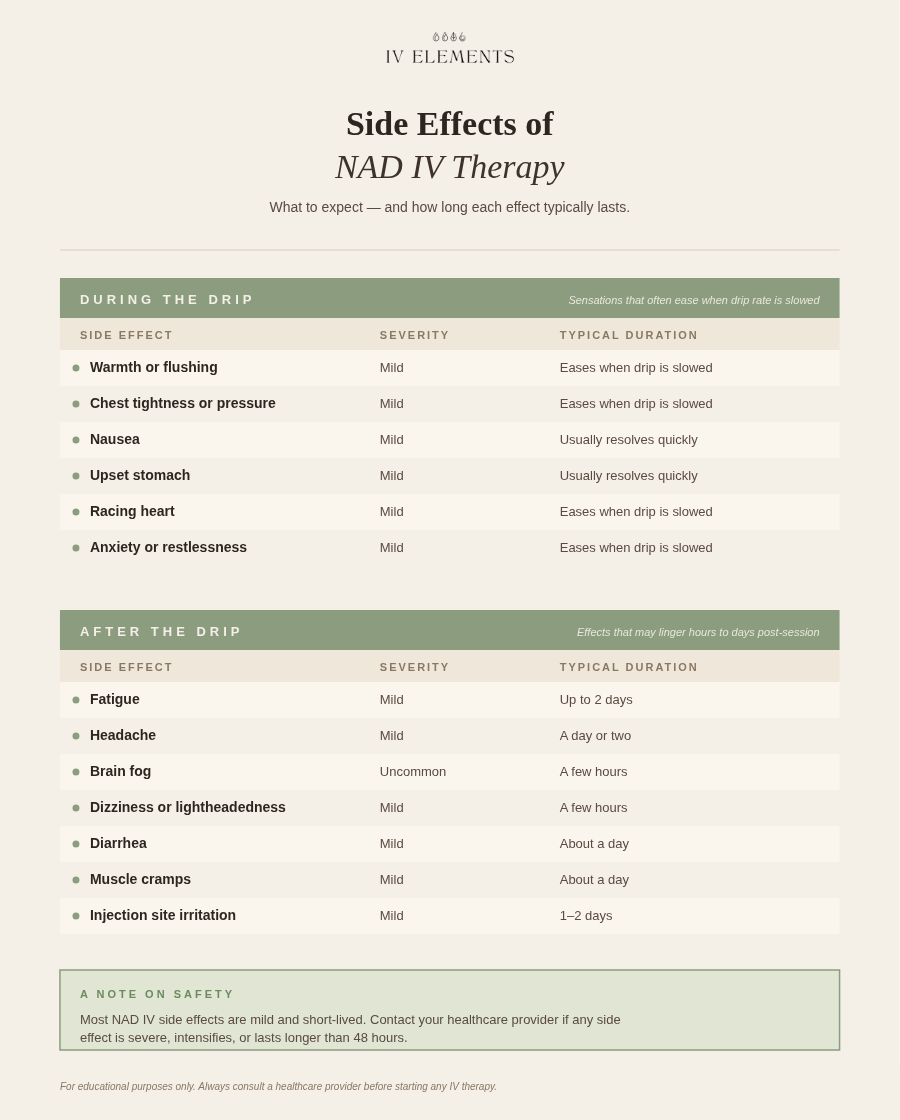
What are the side effects of NAD IV therapy?
Most people only experience mild NAD IV therapy side effects, and they can be separated into two categories: sensations that mainly occur during the drip, and side effects that may linger a couple hours or days after the drip.
Sensations during the drip
NAD infusions can cause mild changes in blood pressure and blood vessel dilation. They may also affect your nervous system and trigger a temporary stress-like response in some people. That’s why you might feel some unusual sensations during treatment, especially if the drip is fast. Slowing the drip rate often eases or gets rid of these symptoms.
Warmth or flushing
During the infusion, some people experience a warm or flushing sensation. It’s usually a sign of a stress-like response caused by a fast drip. This symptom often goes away once the nurse slows your drip.
Chest tightness or pressure
Like warmth or flushing, chest tightness may signal a stress response and tends to fade when your drip is slowed.
Nausea
You might experience some nausea during your infusion, especially if you’re prone to motion sickness. Some people also experience vomiting, but it’s much more rare.
Upset stomach
The infusion may also cause uncomfortable stomach symptoms such as cramping, bloating, or gas. These symptoms are usually mild.
Increased heart rate
A racing heart may be related to the infusion’s impact on your blood pressure and blood vessels. Like the other sensations, it usually eases when the drip is slowed.
Anxiety or restlessness
Some people feel a little anxious, restless, or jittery when the infusion starts. These feelings often indicate the drip is too fast.
Side effects that may last after the drip
As you recover from the infusion, you might experience some side effects for a few hours or days while your body adjusts to the additional NAD.
Fatigue
NAD IV therapy makes some people feel tired or weak. This side effect often starts during the infusion and may last up to two days. You can manage it by taking time to rest after the infusion.
Headache
Some people experience headaches or head pressure during or after infusion, especially if they have a history of chronic headaches. This symptom tends to be mild and fades within a day or two.
Brain fog
While somewhat uncommon, you might experience symptoms of brain fog like trouble concentrating or mild forgetfulness. These effects typically go away within a couple hours after the infusion, especially if you stay hydrated and let your body rest.
Dizziness
You might feel dizzy or lightheaded right after your infusion — that’s why you should stand up slowly once your treatment ends. This side effect generally goes away within hours.
Diarrhea
Some people experience diarrhea in the hours after NAD IV therapy, especially if they had an upset stomach during the infusion. This side effect is more common with faster drip rates, and it tends to go away within a day.
Muscle cramps
Muscle cramps can occur during or after the infusion. They usually go away within a day, especially if you drink plenty of water.
Irritation at the injection site
Like any IV therapy, an NAD infusion may cause redness, tenderness, or bruising at the injection site. It usually only takes a day or two for these symptoms to fade.
If any of these side effects are severe or don’t go away, contact your healthcare provider immediately.
How long do NAD IV side effects last?
Many side effects — like warmth or flushing, chest tightness, increased heart rate, and anxiety — only last during the infusion. They tend to fade when your drip is slowed or stopped.
Other side effects, such as fatigue, brain fog, and headache, may linger a little longer. They’re most common in the first hour or two after infusion, and they typically lessen within 6 hours. Some people also feel lingering nausea during this period, although it’s rare.
After 6 hours, you might still feel a little tired or have a mild headache, but these effects generally ease as each hour goes by. Most people feel back to normal within 24–48 hours. If your side effects last longer than that, talk to your doctor.
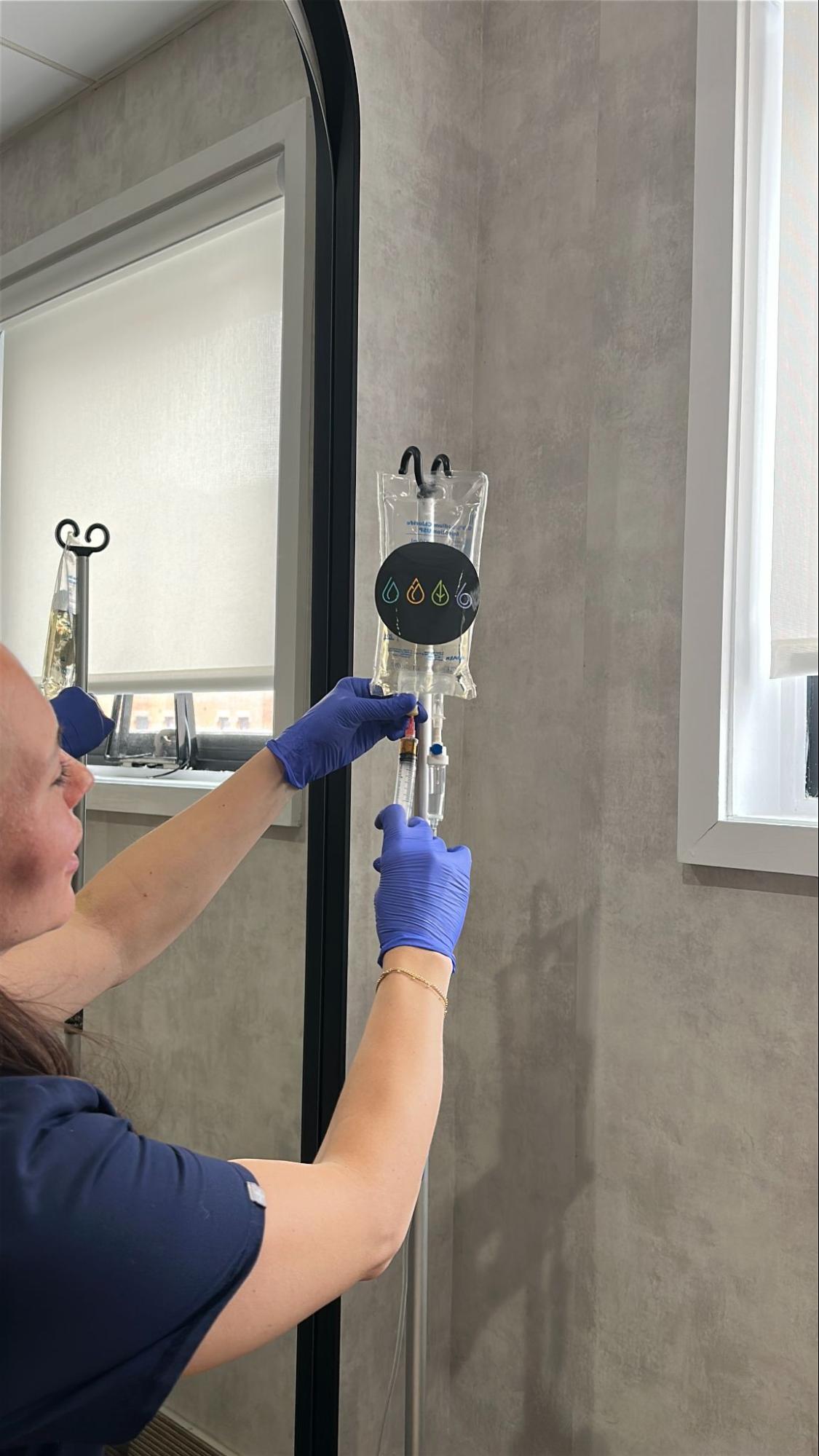
How to minimize NAD therapy side effects
To reduce the risk of side effects from NAD IV therapy, you should:
- alert your provider of any unusual sensations so they can slow your drip if needed
- drink plenty of water before and after your session
- avoid alcohol and caffeine, which can dehydrate you and contract your veins, making it harder to start your IV
- get plenty of sleep before your session
- eat a light snack before and after your session to ease nausea or dizziness
- take it easy and avoid intense exercise in the first few days after your infusion
- have someone else drive you home after your session in case of nausea, fatigue, or dizziness
- tell your provider your full health history, including any health conditions, allergies, and medications or supplements you take (as some substances can interact with NAD products or infusion ingredients)
You can also ask your healthcare provider about over-the-counter medications or supplements you could use to help manage side effects like nausea and headache.
Contraindications: who shouldn’t get NAD IV therapy?
Some people are more likely to experience NAD IV therapy risks and should avoid the infusions altogether.
People with certain health conditions
Some health conditions could make NAD IV therapy unsafe, including:
- severe heart disease (such as serious arrhythmias or recent heart attack), as the infusions may cause chest pressure or blood pressure changes
- severe liver or kidney disease, which impact your ability to tolerate IV fluids
- <a href=”https://ivelements.net/chemotherapy-radi
 Share
Share  Tweet
Tweet  Share
Share  Email
Email 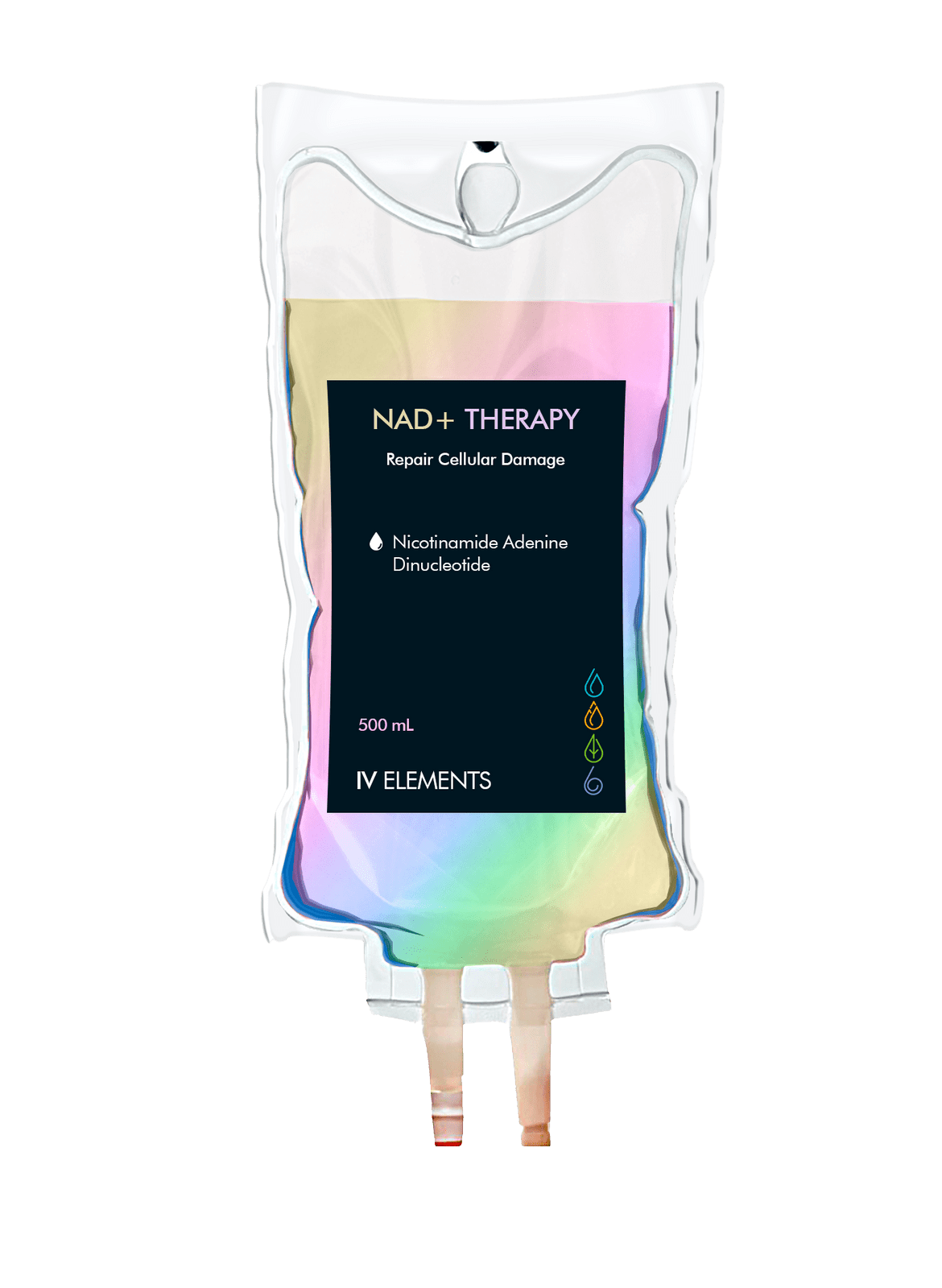
BR+ NAD IV Therapy and Treatment
Studies have shown that NAD+ can help those battling from an array of aging and chronic conditions in the human body and brain, and can also be the light at the end of the tunnel for many people suffering from opiate, alcohol and other drug addictions.