Benefits and Uses of Chelation Therapy
- April 12, 2024
- Written by : Rebecca LaMarca, MSN, APN-BC, CNS
If you’re concerned about metals like arsenic, mercury, and lead building up in your body and causing toxicity, chelation therapy can help. This IV treatment helps remove toxic heavy metals from your system using special drugs called chelating agents — learn the full breakdown in our complete guide to chelation therapy.
By ridding your body of excess metals, chelation therapy can benefit your health in a number of important ways. Here’s what you should know about chelation therapy benefits and how you can discover them in New Jersey, New York City, and Philadelphia.
The science behind chelation therapy
Chelation therapy uses chelating agents like ethylenediaminetetraacetic acid (EDTA) to remove toxic metals from your body. The chelating agent is infused into your bloodstream via an IV line. It then binds to certain metals (including lead, mercury, iron, copper, and arsenic) and forms a compound that’s later excreted through the urine or stool. Learn more about how chelation therapy works.
What are the benefits of chelation therapy?
The main benefits of chelation therapy include heavy metal removal, less oxidative stress, improved cardiovascular health, and increased energy.
Heavy metal removal
While small amounts of heavy metal won’t harm you, larger amounts can lead to heavy metal poisoning. You’re more likely to get heavy metal poisoning if you drink contaminated water, work with metals, or take too many medicines or supplements that have metal in them. Common symptoms include:
- stomach, muscle, and joint pain
- nausea or vomiting
- diarrhea
- dehydration
- numbness or tingling in the hands or feet
- anxiety
- depression
- trouble concentrating
In severe, untreated cases, heavy metal poisoning can have life-threatening risks like anemia and brain damage. Chelation therapy is an effective way to eliminate toxic metals from your body, helping you stay healthy and safe.
Less oxidative stress
Some research suggests that chelation therapy can decrease oxidative stress in some people. Oxidative stress happens when your body contains too many free radicals, which are unstable molecules that can damage your cells.
Over time, oxidative stress may contribute to health conditions like cancer, cardiovascular disease, and Alzheimer’s disease. Though more studies are needed, chelation therapy may help reduce oxidative stress because toxic metal buildup can help free radicals form.
Improved cardiovascular health
Some preliminary research suggests that chelation therapy may lower the risk of cardiovascular events (such as heart attacks and strokes) in people with diabetes.
A 2013 study of chelation therapy in diabetes patients showed a 41% decrease in the risk of a cardiovascular event. This effect might be related to chelation therapy’s effects on oxidative stress, which can harm your cardiovascular system.
However, more research is needed to confirm whether there is indeed a link between chelation therapy and heart health.
Increased energy
Excess heavy metals can make you feel tired, weak, and mentally foggy. Many people with metal-related conditions like hemochromatosis experience fatigue on a regular basis. In these cases, chelation therapy could boost your energy by removing toxic metals, making it easier to get through your day. Researchers are still investigating whether chelation therapy may reduce fatigue in people without heavy metal poisoning.
What is chelation therapy used for?
Chelation therapy has only been approved by the FDA for the treatment of heavy metal poisoning. The most common types of heavy metal poisoning include lead poisoning, mercury poisoning, arsenic poisoning, iron overload, and copper overload.
Some researchers are also exploring the use of chelating agents like EDTA to help manage other conditions, such as:
- fibromyalgia
- lupus
- arthritis
- neurodegenerative diseases like Parkinson’s disease and Alzheimer’s disease
- atherosclerosis
- depression
- diabetes
- coronary artery disease
- hair loss
- hypertension
- osteoporosis
- shingles
More studies are needed to determine if the use of chelation therapy can actually help treat these conditions.
Chelation therapy is also sometimes used in alternative or integrative care settings to help people manage mold-related illness alongside conventional FDA-approved treatments. That’s because chelating agents may help remove toxic byproducts and heavy metals linked with mold exposure.
The Mold Toxicity Toolkit at IV Elements
Five IV therapies used to support the body during recovery from mold exposure. Chosen individually or in combination based on your unique needs.
| Treatment | What It Does | When It’s Used | Session Length | Dose Options |
|---|---|---|---|---|
| Chelation (EDTA) | Binds to heavy metals in the bloodstream and removes them through urine — often paired with mold detox when metal co-exposure is documented (e.g., old plumbing, water-damaged buildings) | For patients with confirmed heavy metal toxicity co-occurring with mold exposure. Not a direct mycotoxin binder. | 2–5 hours (slow infusion required) | 0.8g · 1.5g · 3g EDTA |
| Ozone Therapy (MAH) | Introduces medical-grade ozone into the bloodstream to trigger a controlled oxidative response that may support immune function and reduce inflammation | For general immune and inflammation support during mold recovery, or in combination with other therapies | 30–60 minutes | Standard MAH protocol; series typically recommended |
| 10-Pass Ozone | More intensive ozone protocol — 10 cycles of pressurized blood ozonation. Treats ~2 liters of blood per session for deeper systemic effects | For severe or chronic mold-related symptoms, or when standard ozone alone hasn’t produced sufficient response | 60–90 minutes | 10 passes standard; series usually 6–10 sessions |
| Ultraviolet Blood Irradiation (UVBI) | Small volume of blood exposed to specific UV wavelengths and reinfused, potentially supporting immune modulation and pathogen response | For immune support during mold recovery. Often combined with ozone therapy for enhanced effect | 30–45 minutes | Series-based; often 3–10 sessions per treatment course |
| Methylene Blue IV | Antioxidant and mitochondrial support agent that may help with cognitive symptoms (brain fog, fatigue) commonly linked to mold-related illness | For patients experiencing neurological or cognitive symptoms during mold recovery | 30–60 minutes | 1–2 mg/kg per session (individualized based on lab work) |
Where can I get chelation therapy in New Jersey?
You can get chelation therapy in Hoboken, Parsippany, Asbury Park, and Marlton, NJ at IV Elements. Our calming drip lounges are staffed by board-certified nurses who provide personalized, evidence-based care. We also offer convenient in-home infusions across New Jersey, New York City, Philadelphia, and Bucks County, PA.
Does chelation therapy have any risks?
Yes. Chelation therapy may pose risks such as low blood pressure, allergic reactions, and depletion of essential minerals like zinc, copper, and iron. Also, despite EDTA’s benefits, the agent can also cause dangerous drops in calcium (hypocalcemia) by binding to it and excreting it along with toxic metals.
To avoid these risks, you should only get chelation therapy under the supervision of a certified healthcare professional. The professional will test your heavy metal levels before and after therapy to make sure they stay balanced. They will also make sure you don’t lose any essential nutrients.
In addition, your provider will closely monitor you during your infusion and watch for any side effects. Often, slowing the drip can ease common side effects like nausea and dizziness.
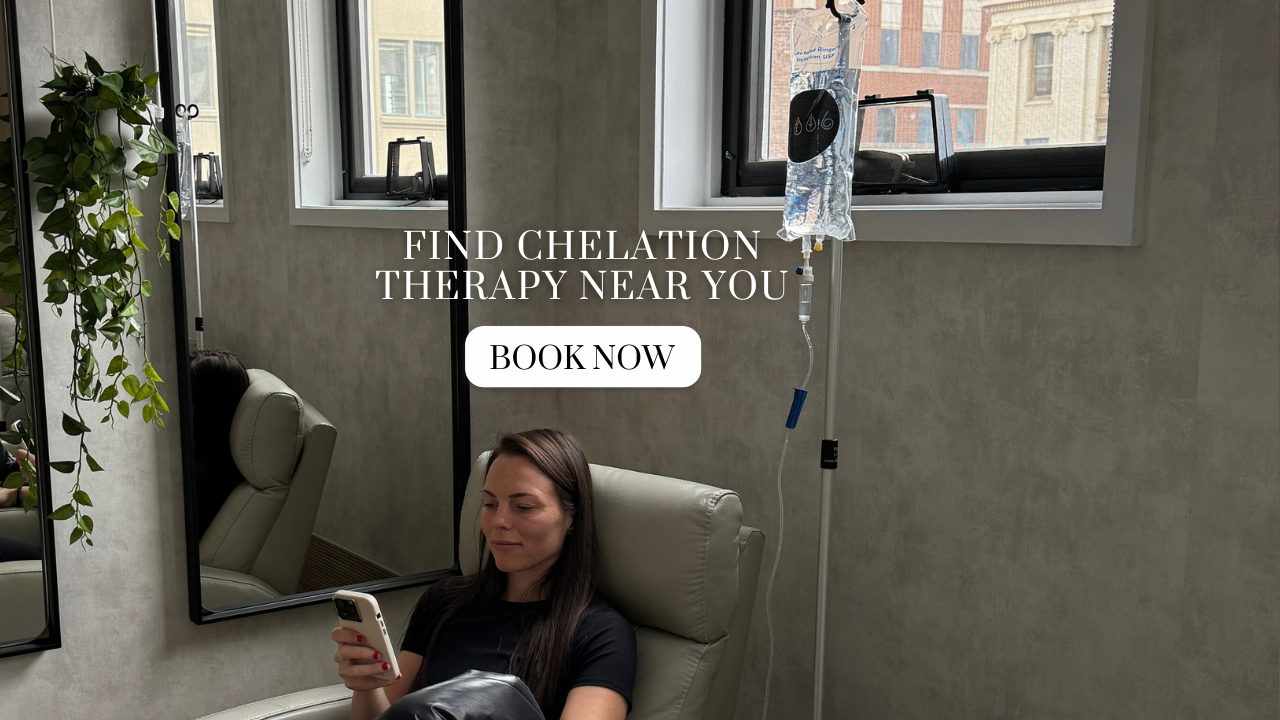
Restore your body with chelation therapy at IV Elements
If you’re struggling with toxic heavy metal levels, reach out to the certified team at IV Elements. We offer in-lounge and at-home chelation therapy across NJ. We also serve NYC and Philadelphia residents through our mobile service. As members of the Physicians’ Association for Anthroposophic Medicine (PAAM) and the Institute of Functional Medicine (IFM), we’re committed to helping you reach your integrative wellness goals with fully customized care. Schedule your consultation today!
Frequently Asked Questions
What does chelation therapy help with?
Chelation therapy is approved by the FDA to help treat heavy metal poisoning. Some researchers think it might also help treat conditions like fibromyalgia, arthritis, lupus, Alzheimer’s disease, and Parkinson’s disease, but more studies are needed.Does chelation therapy work for inflammation?
While some researchers are examining the use of chelation therapy for inflammation, no studies have determined if the treatment has an actual impact on inflammation.Does chelation therapy reduce fatigue?
Chelation therapy may decrease fatigue in people with heavy metal poisoning. But researchers have not yet determined whether chelation therapy for fatigue is effective in people without heavy metal poisoning.Can chelation therapy help with chronic pain?
Some people with chronic pain seek chelation therapy from alternative medicine clinics to treat their symptoms. However, studies have not determined whether chelating agents actually have an effect on chronic pain.Does chelation therapy improve circulation?
Research suggests that chelation therapy might improve circulation in some people, especially EDTA chelation. However, more studies are needed to confirm this effect.Does chelation therapy help with brain fog?
Chelation therapy might help reduce brain fog when the symptom is caused by heavy metal poisoning. But scientists aren’t sure if it can treat brain fog caused by other factors.Can chelation therapy help autoimmune symptoms?
If you have an autoimmune condition that’s aggravated by heavy metal poisoning, chelation therapy may improve your symptoms. But if you don’t have heavy metal poisoning, the therapy might not have that same effect.How much does chelation therapy cost in NJ?
The price of chelation therapy in New Jersey and other states depends on your needs and your provider. You can explore IV Elements’ chelation therapy prices here.References
- Do You Have Heavy Metal Toxicity? Treatments, Symptoms, & Testing. (2025, November 13). IV Elements. https://ivelements.net/heavy-metal-toxicity
- Chelation IV Therapy From IV Elements. (2022, March 16). IV Elements. https://ivelements.net/chelation-therapy
- Benefits and Uses of Chelation Therapy | EDTA Infusions. (2024, April 12). IV Elements. https://ivelements.net/blog/benefits-and-uses-of-chelation-therapy
- Cleveland Clinic. (2022, July 7). Heavy Metal Poisoning (Toxicity). Cleveland Clinic. https://my.clevelandclinic.org/health/diseases/23424-heavy-metal-poisoning-toxicity
- Cleveland Clinic. (2024, February 29). What Is Oxidative Stress? Cleveland Clinic. https://my.clevelandclinic.org/health/articles/oxidative-stress
- Valko, M., Morris, H., & Cronin, M. (2005). Metals, Toxicity and Oxidative Stress. Current Medicinal Chemistry, 12(10), 1161–1208. https://doi.org/10.2174/0929867053764635
- Chelation for Coronary Heart Disease: What You Need To Know. (n.d.). NCCIH. https://www.nccih.nih.gov/health/chelation-for-coronary-heart-disease-what-you-need-to-know
- Mayo Clinic. (2023, January 6). Hemochromatosis – Symptoms and causes. Mayo Clinic. https://www.mayoclinic.org/diseases-conditions/hemochromatosis/symptoms-causes/syc-20351443
- How Chelation Therapy Kills Mold | IV for Mold Toxicity. (2024, March 20). IV Elements. https://ivelements.net/blog/how-chelation-therapy-kills-mold
- Schedule Your IV Therapy At-Home | Book IV Drip Now. (2024, November 4). IV Elements. https://ivelements.net/book-now-1
 Share
Share  Tweet
Tweet  Share
Share  Email
Email