How Quickly Does IV Iron Increase Hemoglobin? A Guide to Iron Infusions
- September 22, 2025
- Written by : Rebecca LaMarca, MSN, APN-BC, CNS

IV iron therapy has become a popular treatment for anemia. It delivers an infusion directly to the bloodstream to boost hemoglobin production. For anemic patients, receiving an IV iron drip provides day-to-day symptom relief and can help increase energy levels. Could a hemoglobin infusion be right for you? Let’s explore how IV iron drips work and the benefits they offer for anemic patients.
Understanding Hemoglobin and Its Role in the Body
Hemoglobin is a type of protein that is present in red blood cells. This protein contains iron, which gives blood its red color.
Hemoglobin transports oxygen throughout the body via the bloodstream. This oxygen supply helps your muscles and organs function properly. When your body doesn’t produce enough hemoglobin, your cardiovascular system will struggle to maintain normal blood cell levels. This means there won’t be enough blood cells to deliver the oxygen your body needs.
Low hemoglobin causes a range of symptoms that can interfere with your daily life, including:
- Muscle weakness
- Shortness of breath
- General fatigue
- Pale skin
- Discolored lips
- Cold hands and feet
- Brittle nails
The body needs iron to produce hemoglobin, so patients with iron-deficiency anemia struggle with low hemoglobin levels. Chronic disease anemia is also associated with low hemoglobin levels. This happens when patients have an underlying condition like kidney disease, cancer, or an immune condition. These conditions affect how the body processes iron, leading to a low red blood cell count.
Causes of Low Hemoglobin and Iron Deficiency
There are a variety of factors that can cause an iron deficiency and lead to low hemoglobin levels. These include:
- Blood loss: When you lose a large amount of blood quickly, the body struggles to reproduce enough iron to replace it, which can cause a deficiency. This is particularly common in people with heavy menstrual periods or certain gastrointestinal conditions, which can cause significant blood loss regularly. You may also experience iron deficiencies after a traumatic injury or donating blood.
- Poor iron absorption: Some gastrointestinal conditions limit the body’s ability to absorb iron, even if you eat iron-rich foods. These include Crohn’s disease, celiac disease, and inflammatory bowel disease. Some medications also inhibit the body’s ability to absorb iron.
- Dietary deficiency: When you don’t get enough iron in your diet, your body will struggle to produce enough hemoglobin. Common sources of iron include lean meats, seafood, leafy greens, and beans. If you eat a vegetarian or vegan diet, you may need to take an iron supplement if you are not getting enough iron from vegetables and legumes alone.
- Pregnancy: During pregnancy, the body needs higher levels of iron than normal to support the fetus. If you don’t increase your iron intake during this time, it could result in a deficiency.
- Chronic health conditions: Many chronic health conditions increase the body’s inflammation levels. Inflammation redistributes iron in the body, so even if you’re consuming plenty of iron in your diet, it may not be used to produce hemoglobin. In this case, iron supplementation is necessary to prevent anemia.
Certain groups of people are at higher risk for iron deficiency than others. We’ve already mentioned menstruating and pregnant people, as well as those with underlying chronic illnesses. Elderly patients are also at higher risk for iron deficiency due to age-related changes in the cardiovascular system. Finally, patients who have recently had surgery are also at risk of anemia due to blood loss during the procedure, as well as medications taken afterward that can interfere with gastrointestinal function.
If you think you may have an iron or hemoglobin deficiency, your healthcare provider can diagnose it using a blood test.
What Is a Hemoglobin Infusion and How Does It Work?
For patients with iron deficiency, intravenous iron therapy can provide symptom relief. This treatment, also sometimes called a hemoglobin infusion or hemoglobin IV therapy, offers a more efficient alternative to traditional oral iron supplements.
With an oral iron supplement, you’ll need to wait for the digestive system to process the treatment, so it can take time to see results. IV iron therapy bypasses the digestive system entirely and delivers iron straight into the bloodstream. This helps the body produce hemoglobin faster, so the patient sees results more quickly.
There are several possible IV iron formulations, including:
- Ferric carboxymaltose
- Ferric derisomaltose
- Iron sucrose
- Ferric gluconate
- Ferumoxytol
When you receive an IV iron infusion, your provider will help you select a formulation based on your needs. They will evaluate factors like the severity of iron deficiency, any underlying medical causes, and the cost of treatment to select the formulation that’s right for you.
How Much Does IV Iron Increase Hemoglobin?
So, how quickly does IV iron increase hemoglobin levels, and what improvement should you expect? On average, you can expect to see improved hemoglobin levels within one to three weeks. However, the exact timeline will vary from patient to patient. One study focused on IV iron sucrose therapy found that the average hemoglobin increase after treatment was 3.29 g/DL for women and 4.58 g/DL for men.
There are several factors that will affect the overall increase of hemoglobin after treatment, as well as the length of time it takes to see improvement. The frequency of treatment and the size of the dose you receive will affect the results. For example, you might see a more significant jump in hemoglobin levels after your first session than you would after subsequent maintenance sessions.
Your baseline hemoglobin and ferritin levels will also affect your body’s reaction to an IV drip. Patients with particularly severe deficiencies may also see drastic increases compared to those with mild deficiencies. If you have underlying conditions that affect your body’s ability to absorb iron, you may need a higher dose to see an impact.
After receiving an iron IV infusion, you will likely experience an increase in energy and muscle function as your body produces more hemoglobin.
Who Should Consider IV Iron Therapy?
If you have an intolerance to oral iron supplements, IV iron therapy could provide a more effective alternative. Since the iron is delivered straight to the bloodstream, IV therapy can relieve anemia symptoms faster in some cases.
IV iron therapy is particularly helpful for patients with chronic conditions that affect the digestive system, such as IBD or chronic kidney disease. IV therapy can also be helpful for patients experiencing low iron levels due to pregnancy or heavy menstrual periods.
There are also some instances where it can be helpful to have a proactive iron IV infusion. For example, if you are having a surgery that commonly results in blood loss, your medical provider may recommend that you get an IV drip before the surgery happens. This approach may also be recommended for patients at risk of cancer-related anemia.
Risks and Side Effects of IV Iron
IV iron treatments can be very effective for patients struggling with low hemoglobin levels, especially when alternative therapies aren’t working. For many patients, IV therapy is actually a safer option than oral tablets as it limits digestive risks. However, there are still some potential risks and side effects to be aware of when getting an IV iron drip.
Some common side effects include:
- Headaches
- Dizziness
- Swelling
- Nausea
- Constipation
- Diarrhea
However, these side effects are usually very mild and subside quickly after treatment.
In rare cases, patients may have an allergic reaction to the IV drip formulation. This can result in itching, a skin rash, and difficulty breathing. Seek medical attention right away if you experience these symptoms, especially if they are severe.
If your iron IV infusion contains too large a dose for your needs, you could experience iron overload. This happens when your body receives too much iron to process properly. Some common symptoms of this include fatigue, stomach pain, and heart flutters, although many people don’t experience symptoms at all.
To prevent these adverse reactions and side effects, your IV drip provider will ask about your medical history and allergies prior to treatment. This information helps them select the formulation that’s safest for your needs.
During treatment, your IV providers will make sure the environment is sterile and closely monitor your condition the entire time. They will also take care to provide the correct dose for your needs and make sure the drip is conducted at an appropriate rate.
What to Expect During & After an Iron Infusion
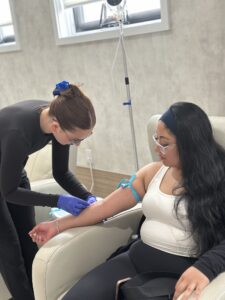
During your IV infusion, your treatment provider will place a needle into your vein, usually on the back of your hand or in your arm. This allows the fluids containing iron to flow from the IV bag into your bloodstream. You might feel mild discomfort around the injection site, although the process is usually not painful.
The infusion usually takes 15 to 30 minutes to complete. Your medical team may choose to monitor your condition for a short period of time afterward before sending you home to make sure you don’t have an adverse reaction.
In the short-term, you might experience some mild side effects like fatigue, nausea, a metallic taste in your mouth, or changes in your urine color. However, you should be able to return to your normal routine fairly quickly.
Over the next few weeks, you will likely start to see an improvement in your symptoms as your hemoglobin levels increase. You might notice increased energy levels, improved concentration, and less muscle fatigue as you go through your daily routine.
Be sure to schedule a follow-up blood test two to four weeks after your initial IV infusion. This will confirm whether or not your iron levels have improved. Your healthcare provider may recommend repeat IV treatments if you have a chronic condition and struggle with consistently low iron levels.
How Is Treatment Monitored?
If you have anemia, your medical provider will use blood tests to monitor your condition. You will likely need to take blood tests before and after your IV session to see how your iron levels change. These tests will focus on your hemoglobin and ferritin levels, as these are both indicators of the amount of iron in your bloodstream. Ferritin is a protein that stores iron in your cells.
Ideally, patients will achieve a ferritin concentration of greater than 100 μg/L after treatment, which is indicative of normal iron levels. You will need to have blood tests on a regular basis after your IV to make sure these iron levels remain consistent, usually every three to six months. If your iron levels do not return to normal after the first IV session, you may need continued therapy to address your symptoms.
Is IV Iron Right for You?
IV iron treatments are an efficient, safe, and effective way to address anemia symptoms. They are particularly effective for patients with chronic conditions that affect the digestive system and limit normal iron absorption.
If you are interested in IV iron treatments, consult with a healthcare provider before getting started. They will help you schedule the appropriate blood tests and make sure IV iron therapy is right for your needs. Speak to your doctor or local infusion center today to get started and schedule your IV treatments.
References
Munro MG, et al. (2023, January 24). The relationship between heavy menstrual bleeding, iron deficiency, and iron deficiency anemia. American Journal of Obstetrics & Gynecology.
Cançado RD, et al. (2011). Efficacy and safety of intravenous iron sucrose in treating adults with iron deficiency anemia. Revista Brasileira de Hematologia e Hemoterapia.
Das SN, et al. (2020, July 30). Oral versus intravenous iron therapy in iron deficiency anemia: An observational study. Journal of Family Medicine and Primary Care.
Soppi ET. (2018, April 17). Iron deficiency without anemia – a clinical challenge. Clinical Case Reports.
 Share
Share  Tweet
Tweet  Share
Share  Email
Email