Vitamin D from Sun Exposure: A Guide to Healthy Levels & Sun Safety
- July 15, 2020
- Written by : Rebecca LaMarca, MSN, APN-BC, CNS
Vitamin D allows your body to absorb calcium and build strong bones. It also helps support functions like immunity, muscle health, and mood. The main way you get this nutrient is through sunlight, as it gives your skin the ability to produce vitamin D.
While this process is important for your health, it’s not without risks. Too much sun exposure can cause issues like sunburn, premature aging, and even skin cancer. That’s why it’s important to strike a balance between getting enough sunlight and avoiding skin damage. Here’s how to keep your skin safe while still enjoying vitamin D from sun exposure.

Sun Exposure Time Needed by Skin Type
| Skin Type | Midday Sun Time Needed | Sun Sensitivity |
| Fair (Type I-II) | 10-15 minutes | Burns easily |
| Medium (Type III-IV) | 15-20 minutes | Tans gradually |
| Olive (Type V) | 20-30 minutes | Rarely burns |
| Dark (Type VI) | 30-60+ minutes | Melanin slows production |
What causes low vitamin D even in summer?
Even if you get a lot of sun in the summertime, you might notice signs of vitamin D deficiency like fatigue, muscle aches, bone pain, mood changes, and hair thinning. This can occur for a few reasons. First, wearing sunscreen, while essential for protecting against skin cancer, can limit your body’s ability to absorb vitamin D. The same thing happens when you only go outside in long sleeves, pants, or other high-coverage clothing.
You might also have low vitamin D if you only get outdoors in the early morning or late afternoon, when the sun’s UVB rays aren’t at their strongest. Living somewhere far from the equator, such as New Jersey, New York City, or Philadelphia, can hinder your levels as well. That’s because these areas get less direct sunlight since the sun sits lower in the sky. Luckily, Northeastern U.S. residents can increase their vitamin D levels by getting booster shots from the experienced, board-certified team at IV Elements.
In addition, certain traits make you more likely to be deficient in vitamin D. For instance, if you have darker skin, the melanin that provides its pigment acts as a natural sunscreen, reducing the sun’s ability to trigger vitamin D production. People over age 65 may also have low levels, as aging skin has a harder time producing vitamin D.
Finally, some health conditions make you more likely to be deficient, including:
- celiac disease
- Crohn’s disease
- ulcerative colitis
- chronic pancreatitis
- cystic fibrosis
- obesity
These conditions can prevent your body from properly absorbing, storing, or using vitamin D.
Benefits vs risks of sun exposure
Getting vitamin D from sun exposure allows your body to produce calcium and protect your bones. Vitamin D can also provide other benefits like immune system regulation, improved mood, and better muscle function.
But that doesn’t mean you should stay in the sun all day to boost your vitamin D. Too much sun poses a number of health risks. That’s because the sun’s rays can damage the DNA in your skin’s delicate cells. Also, regular overexposure can hinder your skin’s immune defenses. That means your skin may struggle to recover from damage.
One of the most common risks of sun overexposure is frequent sunburns, which can cause pain and swelling and increase your risk of skin cancer over time. If your eyes get exposed, you might also develop eye issues like cataracts and photokeratitis (a type of “sunburn” that affects the eyes). Large amounts of sun exposure can also lead to heat exhaustion and heatstroke, which may be deadly.
In addition, you may experience premature skin aging. This happens when the sun’s rays break down the proteins in your skin that keep it healthy (collagen and elastin). Signs of premature aging may include wrinkles, dark spots, and less elasticity. When your skin is less elastic, it’s more prone to damage and may take longer to heal from wounds.
Most alarmingly, too much sun significantly raises your risk of skin cancers, including:
- cutaneous melanoma, a life-threatening cancer involving cells that produce skin pigment (called melanocytes), which can spread to other parts of the body when not detected early enough
- squamous cell carcinoma (SCC), a more common skin cancer that forms in the outer skin layer and may also spread if left untreated
- basal cell carcinoma (BCC), the most common skin cancer, which forms in the lower layer of skin and can destroy the skin and nearby tissues if left untreated
Overexposure to the sun is the biggest avoidable risk factor for all types of skin cancer. Thus, you should always practice sun safety by using sunscreen with an SPF of 15 or higher, wearing sunglasses and protective clothes, and limiting sun exposure between 10 a.m. and 2 p.m. These strategies protect your skin, but they also limit your body’s ability to get vitamin D from sun exposure. That’s why it’s important to learn other ways to boost your vitamin D intake.
How to get vitamin D safely
If you want to increase your vitamin D levels while protecting your skin from excess sun exposure, you have a lot of options.
Food and vitamin D supplements
One of the simplest ways to boost vitamin D is to eat more vitamin D-rich foods, such as:
- fatty fish like salmon, mackerel, and sardines
- eggs
- fortified dairy products like milk, cheese, and yogurt
- fortified orange juice
- mushrooms
In addition, many people take oral vitamin D supplements. Taking a daily supplement can help you naturally maintain healthy vitamin D levels over time. The minimum recommended dose for most adults is between 600 and 800 IU, but you may benefit from a higher dose (like between 1,000 and 2,000 IU) if you’re not getting much sun. For example, some Northeastern U.S. residents need higher doses in winter due to the overcast weather.
Recommended Daily Vitamin D by Age
| Age Group | RDA | Upper Limit |
| Adults 19-70 | 600 IU | 4,000 IU |
| Adults 71+ | 800 IU | 4,000 IU |
| Pregnant/Breastfeeding | 600 IU | 4,000 IU |
| Northeast residents (winter) | 1,000-2,000 IU* | 4,000 IU |
Vitamin D injections
You can also safely boost your vitamin D levels by getting a vitamin D injection. During an injection, a healthcare professional injects vitamin D right into your muscle, and it’s then slowly released into your bloodstream. This process helps your levels stay stable over time, no matter the weather. You can schedule your first booster at an IV Elements New Jersey location or as an in-home visit throughout NJ, NYC, Philadelphia, and Bucks County. Founded by a board-certified nurse practitioner, our drip lounges and mobile services make it easy to keep your body nourished.
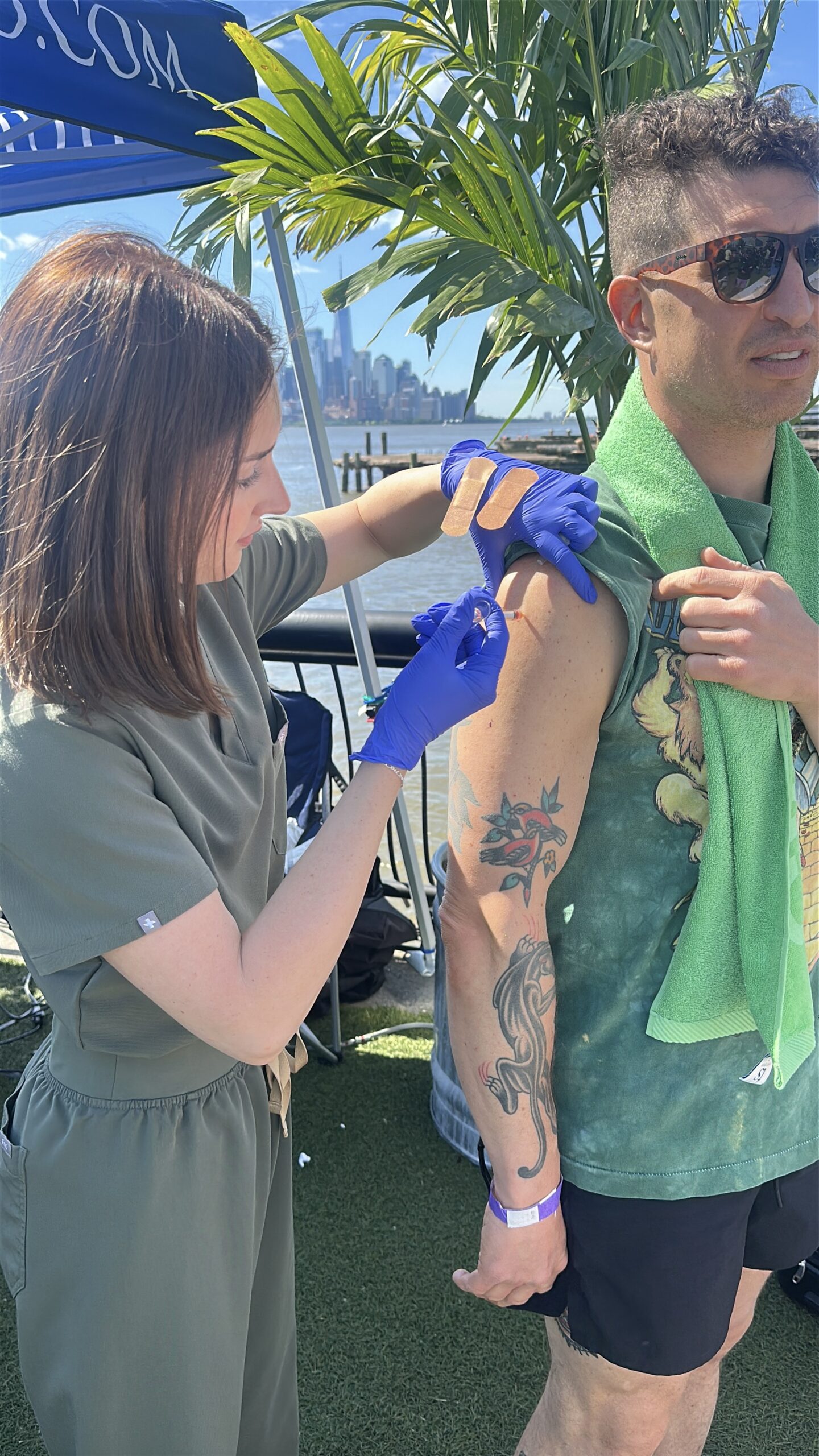
Get a safe, sun-free boost of vitamin D with IV Elements
Want to strengthen your body without risking the damage of getting vitamin D from sun exposure? At IV Elements, we offer personalized vitamin D booster shots at our locations in Hoboken, Asbury Park, Parsippany, and Marlton, NJ. We also provide a convenient mobile service across New Jersey, New York City, Philadelphia, and Bucks County so you can boost your levels right at home. That means you can enjoy the benefits of this essential nutrient while keeping your skin strong, healthy, and vibrant.
As proud members of the Physicians’ Association for Anthroposophic Medicine (PAAM) and Institute of Functional Medicine (IFM), we also offer a variety of vitamin IV treatments to help you reach all of your wellness goals. Contact us today to learn more about our offerings and to schedule your vitamin D booster!
Frequently Asked Questions
Can you get enough vitamin D from the sun?
Some people can, but it depends on factors like your skin tone (people with darker skin need more sun exposure), whether you live somewhere with enough sunlight, and how much time you spend outdoors. Also, you should avoid using the sun as your only source of vitamin D, as too much sunlight poses health risks like sunburn and skin cancer.
How can I protect my skin from sun damage?
You can keep your skin safe on sunny days by:
– wearing sunscreen with an SPF of 15 or higher
– wearing sunglasses and protective clothes like long sleeves and pants
– limiting sun exposure between 10 am and 2 pm (when the sun’s UV rays are at their strongest)
Can sunscreen block vitamin D?
Yes. Sunscreen can make it harder for your skin to produce vitamin D from the sun’s UVB rays. Still, it’s important to wear sunscreen to reduce your risk of skin cancer and other forms of sun damage.
How can you get vitamin D while protecting your skin?
You can increase your vitamin D intake without risking skin damage by eating vitamin D-rich foods (like eggs, fatty fish, mushrooms, and fortified orange juice), taking oral supplements, or getting a vitamin D injection.
When should you get vitamin D injections in NJ, NYC, or Philadelphia?
You should consider vitamin D injections if you want to boost your levels without risking damage from too much sun exposure. They’re also a great option during the grey Northeastern winters, when many residents struggle to get enough sunlight. The boosters can keep your vitamin D levels up even as the days get shorter and the sun seems to hide behind the clouds.
REFERENCES
- Office of Dietary Supplements – Vitamin D. (2025). Nih.gov. https://ods.od.nih.gov/factsheets/VitaminD-HealthProfessional/?uid=84ecfd9da3023s16
- Ananthaswamy, H. N. (2001). Sunlight and Skin Cancer. Journal of Biomedicine and Biotechnology, 1(2), 49–49. https://doi.org/10.1155/s1110724301000122
- Cleveland Clinic. (2023, September 8). Vitamin D Deficiency: Causes, Symptoms & Treatment. https://my.clevelandclinic.org/health/diseases/15050-vitamin-d-vitamin-d-deficiency
- World Health Organization. (2022, June 21). Ultraviolet radiation. https://www.who.int/news-room/fact-sheets/detail/ultraviolet-radiation
- IV Elements. (n.d.). IV Therapy for Radiation and Chemo Recovery. https://ivelements.net/chemotherapy-radiation-recovery
- IV Elements. (n.d.). Anti-Aging IV Therapy. https://ivelements.net/antiaging
- IV Elements. (n.d.). Boosters. https://ivelements.net/boosters
- Matias, P., Ávila, G., Ferreira, A. C., Laranjinha, I., & Ferreira, A. (2023). Hypomagnesemia: a potential underlooked cause of persistent vitamin D deficiency in chronic kidney disease. Clinical Kidney Journal, 16(11), 1776–1785. https://doi.org/10.1093/ckj/sfad123
 Share
Share  Tweet
Tweet  Share
Share  Email
Email