Nicotinamide Adenine Dinucleotide (NAD+) Study
- April 14, 2022
- Written by : Rebecca LaMarca, MSN, APN-BC, CNS
We are usually more familiar with what powers our bodies from the outside, rather than what powers us from within. For example, you know that carbohydrates provide energy, protein builds muscle, and water keeps you hydrated. You might even know that nutrients like zinc and vitamin C fuel your immune system and iron and vitamin B12 help make red blood cells. Many of the nutrients we take in from the outside drive important functions on the inside.
When it comes to unlocking the body’s secrets that regulate aging, metabolism, and energy, a lot of signs point to a molecule in our cells known as nicotinamide adenine dinucleotide – or, to make it easy, NAD+. If you look around for information on NAD+ you are likely to see it referred to as a coenzyme – a compound that participates in important reactions inside cells that drive biological processes and create what our bodies need to survive. NAD+ participates in making some of our most important cellular processes happen.
NAD regulates the function of the sirtuin proteins. The sirtuins are a group of seven proteins that reside inside our cells. The sirtuin proteins regulate critical processes related to cellular aging and metabolism. A decrease in sirtuin function has been shown to be related to metabolic syndrome, obesity, neurodegenerative issues, cognitive decline, and inflammation issues, so optimizing the function of the sirtuin proteins is important for good health as we age. But the sirtuins can’t function without the presence of NAD+. Although the body can and does make NAD+, NAD+ levels simply decline as we get older.
Learn more about the clinical evidence for targeting NAD therapeutically here.
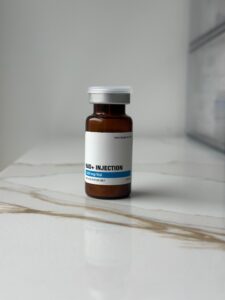
EFFECTS OF NAD ON BRAIN FUNCTION AND COGNITION.
Loss of mitochondrial function is a hallmark of aging and age-associated diseases. An interesting link has emerged between NAD+ metabolism and mitochondrial function. During aging, the brain exhibits mitochondrial dysfunction. NAD+ restores mitochondrial function, leading to enhanced neuronal survival and improved cognitive function in premature aging.
Emerging findings are revealing age-related NAD+ depletion is positively related to the 10 hallmarks of brain aging. Reduced NAD+ levels play a pivotal role in brain aging and neurodegenerative disorders because NAD+ replenishment improves mitochondrial function and reduces accumulation of damaged mitochondria in premature aging models such as Alzheimer’s disease models.
Another model showed ALS has been linked to NAD+ metabolism. ALS is a group of rare neurological diseases with impairment of voluntary muscle movement caused by the progressive degeneration of motor neurons in the spinal cord, brain stem, and motor cortex. The death of motor neurons leads to muscle weakness and paralysis, causing death of the patients within 1–5 years from the time of symptom onset, typically due to respiratory failure. Though the pathology of ALS is complex, mitochondrial dysfunction and increased oxidative stress are common and prominent features of motor neurons.
Learn more about the effects of NAD on brain function and cognition from a recent study here.

INTRAVENOUS NAD+ PHARMACOKINETIC STUDY.
A pilot study investigated changes in human plasma and urine NAD+ and urine during a 6 hour intravenous infusion of NAD+ IV Therapy. This study revealed for the first time the following:
‣ At a flow rate of 3 μmole/min all exogenously infused NAD+ was rapidly and completely removed from the plasma for at least the first 2 hours.
‣ The increase in metabolic bi-products analyzed is consistent with NAD+ glycohydrolases and NAD+ pyrophosphatase activity.
‣ The urinary excretion products arising from NAD+ infusion include native NAD+ and meNAM but not NAM.
To learn more and review this study in its entirety, visit Frontiers: A Pilot Study Investigating Changes in the Human Plasma and Urine NAD+ Metabolome During a 6 Hour Intravenous Infusion of NAD+.

 Share
Share  Tweet
Tweet  Share
Share  Email
Email