IV Therapy for Hangovers: What the Science Says About Faster Recovery
- May 11, 2023
- Written by : Rebecca LaMarca, MSN, APN-BC, CNS
Key Takeaways
- A hangover is not just dehydration. Alcohol affects fluid regulation, sleep, the gut, inflammation, and metabolism all at once.
- IV therapy may help ease some hangover symptoms by delivering fluids and nutrients directly into the bloodstream, bypassing the gut.
- IV therapy does not cure a hangover or speed up alcohol metabolism. Your body still needs time to process alcohol and its byproducts.
- IV Elements offers the Hangover Rescue IV at four flagship NJ lounges (Hoboken, Asbury Park, Parsippany, Marlton) and through mobile service across NJ, NYC, Philadelphia, and Bucks County, PA.
- Every client is screened by an ER-trained nurse before treatment. IV therapy is not appropriate for everyone.
Does IV therapy work for hangovers? IV therapy may help ease some hangover symptoms, particularly when fluid loss or difficulty maintaining hydration is part of the problem. It is important to note that IV therapy is not designed to cure a hangover or instantly reverse the effects of alcohol.
A hangover is more than dehydration. Alcohol affects fluid regulation, sleep, the gastrointestinal tract, inflammatory pathways, and alcohol metabolism.1 These effects can contribute to headaches, thirst, fatigue, nausea, stomach discomfort, muscle aches, anxiety, and difficulty concentrating.
IV therapy for hangovers may help address some of these concerns by delivering fluids directly into the bloodstream. Understanding what an IV can realistically do, and what causes a hangover in the first place, can help you decide whether treatment is right for you.
Does IV therapy work for hangovers?
IV therapy may provide relief from certain hangover symptoms, but there is no strong evidence it can cure a hangover. Alcohol suppresses vasopressin, a hormone involved in fluid retention, which can increase urination and contribute to dehydration.2 That dehydration can contribute to thirst, fatigue, and headaches.
Whether IV drips work for hangovers depends on the individual. Factors like hangover intensity and dehydration level need to be considered. IV therapy may help address fluid loss and provide targeted support for certain symptoms, which can support recovery time and may reduce the intensity of headaches, muscle aches, thirst, and nausea.
What causes a hangover scientifically?
A hangover involves several biological processes happening at the same time. Five mechanisms are particularly useful for understanding why you may feel dehydrated, exhausted, nauseated, achy, and generally unwell after drinking.
| Biological Mechanism | What Happens After Drinking | Common Symptoms |
|---|---|---|
| Alcohol-induced dehydration | Alcohol suppresses antidiuretic hormone (ADH), causing increased fluid excretion and reduced intravascular volume. This may lead to decreased cerebral perfusion and higher blood viscosity. | Thirst, fatigue, headaches, dry mouth, weakness |
| Fluid and electrolyte disruption | Increased urination and alcohol-related vomiting can cause loss of water and electrolytes, including sodium and potassium. These are essential for fluid balance and muscle function. | Weakness, dizziness, thirst, nausea |
| Acetaldehyde accumulation | The liver breaks down alcohol into acetaldehyde, a reactive and potentially toxic compound. If acetaldehyde accumulates, it can contribute to cellular stress. | Nausea, facial flushing, rapid heartbeat, inflammatory effects |
| Inflammatory response | Alcohol metabolism can increase oxidative stress and affect immune signaling, releasing inflammatory mediators. | Malaise, fatigue, headaches, body aches |
| Sleep architecture impairment | Alcohol can disrupt and fragment normal sleep patterns, including REM sleep. Inadequate sleep can impair attention, mood regulation, and daytime function. | Fatigue, irritability, difficulty concentrating |
These mechanisms overlap, which is why hangover symptoms can feel so disorienting the next day. Understanding the biology of a hangover can help you decide which personalized IV treatment, if any, is right for you.
Need relief after a long night?
Our Hangover Rescue IV is built around fluids, B-complex, magnesium, and vitamin C, with optional medication support when clinically indicated.
Why do I feel so bad after drinking?
You may feel so poorly the morning after because alcohol affects several body systems at once, and some of those effects continue after your blood alcohol concentration approaches zero, according to the National Institute on Alcohol Abuse and Alcoholism.1
Drinking can take a toll on the body in overlapping ways. Increased urination, gastrointestinal irritation, and sleep disruption all contribute to fatigue and weakness. Changes in brain activity as alcohol wears off may also contribute to anxiety, restlessness, and irritability.
How can IV therapy help a hangover?
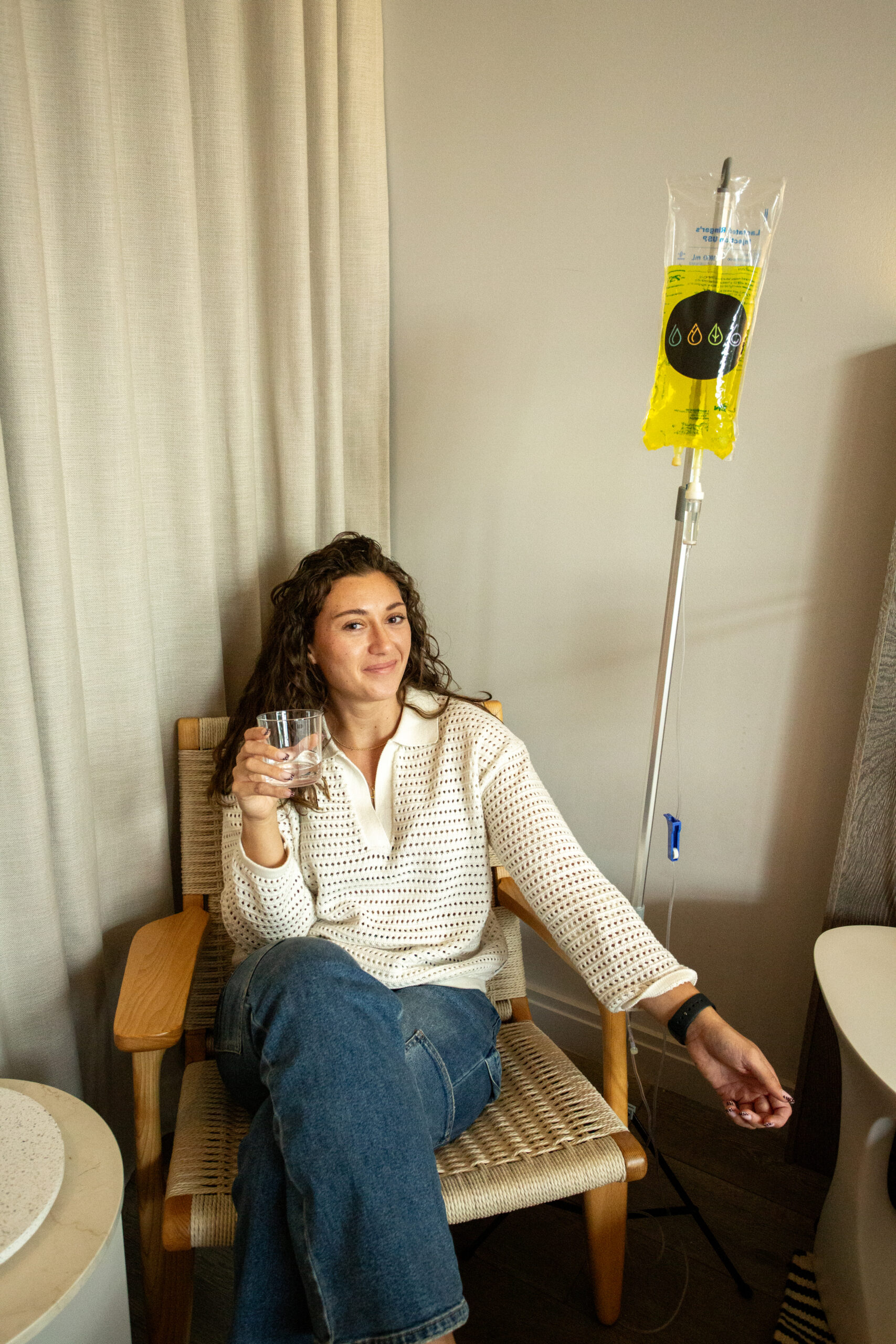
IV therapy has grown in popularity in part because of how fluids and nutrients are absorbed. IV therapy delivers fluid directly into the bloodstream, which bypasses the gastrointestinal tract. That direct delivery can be especially useful when nausea, vomiting, or other symptoms make it hard to keep fluids down.
At IV Elements, our ER-trained nurses review your medical history, medications, symptoms, and health goals before treatment to determine which IV is appropriate for you. The Hangover Rescue IV includes IV fluids, B-complex vitamins, magnesium, and vitamin C, with options for headache and nausea medication when clinically indicated and administered under medical oversight.
The role of each component should also be understood realistically:
- IV fluids provide hydration directly into the bloodstream.
- Minerals and electrolytes may help address fluid or nutrient losses when appropriate.
- B vitamins and vitamin C support nutrients involved in normal physiological processes, but their inclusion does not mean they cure a hangover.
- Medication for headaches or nausea, when clinically appropriate, addresses specific symptoms rather than eliminating the underlying effects of alcohol.
The goal is targeted hydration and symptom support while your body continues its normal recovery process.
How fast does IV therapy work for a hangover?
There is no scientifically established timeframe for how fast IV therapy works for hangovers. IV therapy does not accelerate alcohol metabolism. It may help manage symptoms. The body still needs time to process alcohol and its byproducts. The NIAAA notes that there is no scientifically proven way to speed up the body’s recovery from a hangover.1 IV therapy may support recovery time and may reduce the intensity and duration of certain symptoms.
Can IV therapy prevent a hangover?
There is not enough evidence to recommend IV therapy as a reliable way to prevent a hangover. The most dependable way to prevent a hangover is to avoid alcohol or limit how much you drink. According to the NIAAA, no hangover remedy has been scientifically established as a complete preventive treatment. An IV should be viewed as a potential recovery option, not protection against the effects of drinking.
Is IV therapy for a hangover safe?
IV therapy can be appropriate for some people when administered by qualified medical professionals, but it is not risk-free. Pain or bruising at the IV site is possible, along with vein irritation. Your medical history, medications, allergies, kidney or heart conditions, and other factors may affect whether IV treatment is right for you. At IV Elements, every client is reviewed by an ER-trained nurse before any infusion.
Find hangover relief with IV Elements
A hangover is not simply a hydration problem. Understanding what causes a hangover is part of understanding what IV therapy can and cannot do. IV therapy may help support and lessen the symptoms that come with drinking, and knowing the realistic benefits helps you choose the right treatment for you.
Founded in March 2019 by Rebecca LaMarca, MSN, APN-BC, CNS, a board-certified nurse practitioner, IV Elements has been paving the way for how alternative and integrative medicine is delivered in New Jersey. Our team brings hands-on clinical experience to each treatment, with ER-trained nurses who screen every client before any infusion. The Hangover Rescue IV is available at our four flagship drip lounges in Hoboken, Asbury Park, Parsippany, and Marlton, as well as through mobile IV service across NJ, NYC, Philadelphia, and Bucks County, PA.
Book Your Hangover Rescue IV
Frequently Asked Questions
Can you still be dehydrated after drinking water during a hangover?↓
Why does alcohol make me nauseous the next day?↓
Does an IV help if I am vomiting after drinking?↓
Does an IV make you sober faster?↓
What should I do if my symptoms seem worse than a normal hangover?↓
How soon after drinking should I get a hangover IV?↓
Can I get a hangover IV at home in NJ?↓
References
- National Institute on Alcohol Abuse and Alcoholism. Hangovers. https://www.niaaa.nih.gov/publications/brochures-and-fact-sheets/hangovers
- National Institute on Alcohol Abuse and Alcoholism. Alcohol Metabolism. https://www.niaaa.nih.gov/publications/alcohol-metabolism
- Palmer, E., et al. (2024). Review article on hangover pathophysiology. PMC. https://pmc.ncbi.nlm.nih.gov/articles/PMC11146604/
- Prat, G., Adan, A., & Sanchez-Turet, M. (2009). Alcohol hangover: a critical review of explanatory factors. Human Psychopharmacology. https://pmc.ncbi.nlm.nih.gov/articles/PMC2770186/
- Penning, R., van Nuland, M., Fliervoet, L. A. L., Olivier, B., & Verster, J. C. (2010). The pathology of alcohol hangover. Current Drug Abuse Reviews, 3(2). https://pubmed.ncbi.nlm.nih.gov/20712596/
- University of Rochester Medical Center. Hangover IVs: Do They Really Work? https://www.urmc.rochester.edu/news/publications/health-matters/hangover-ivs-do-they-really-work
 Share
 Tweet
 Share
 Email

Hangover Rescue & Stomach Bug IV Drip
Love a good night out, but hate waking up with a terrible hangover? Detoxify your body with IV fluids, electrolytes and vitamins and get that quick natural energy boost.


