Is Semaglutide Safe? What to Know About the Safety Profile
- December 5, 2024
- Written by : Rebecca LaMarca, MSN, APN-BC, CNS
If you have type 2 diabetes or struggle with weight management, you’ve likely heard of semaglutide. This medication can improve blood sugar control and support weight loss by reducing appetite and increasing feelings of fullness. It can also lower the risk of major cardiovascular events in people with type 2 diabetes or cardiovascular disease. But like most prescription drugs, it comes with some side effects and safety risks.
Here’s what you should know about the safety of semaglutide before you add it to your diabetes treatment or weight management plan. The certified nurses at IV Elements offer convenient semaglutide injections and oral tablets across New Jersey, New York City, and Philadelphia.
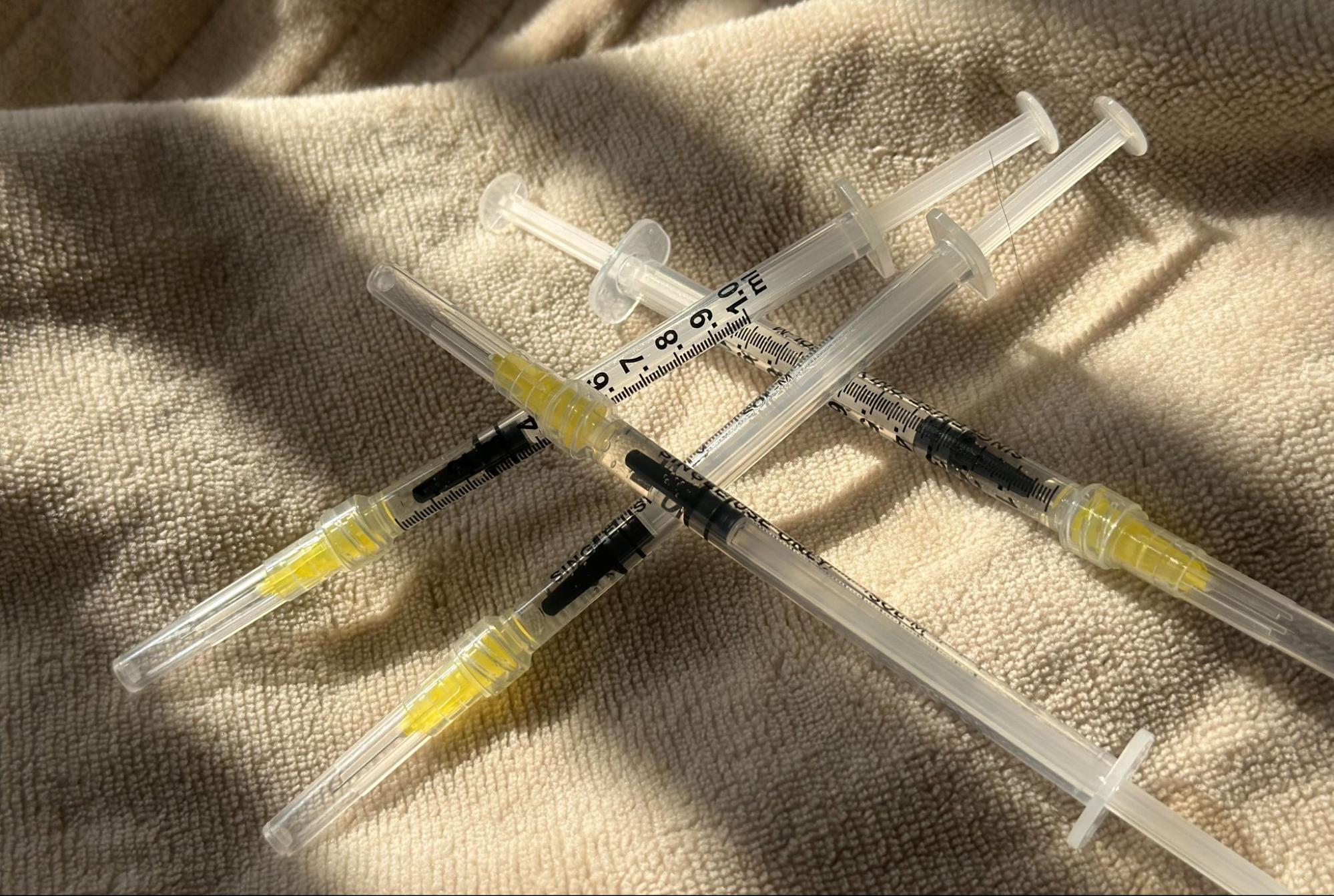
Is semaglutide safe?
Semaglutide is generally safe when prescribed and monitored by a licensed healthcare provider. However, it’s important to understand the drug’s side effects, long-term risks, and contraindications.
At IV Elements, we offer comprehensive, personalized consultations for all semaglutide patients so you can learn how the medication might affect you before using it. We also combine semaglutide with vitamin B6, which can make side effects more manageable.
What are the side effects of semaglutide?
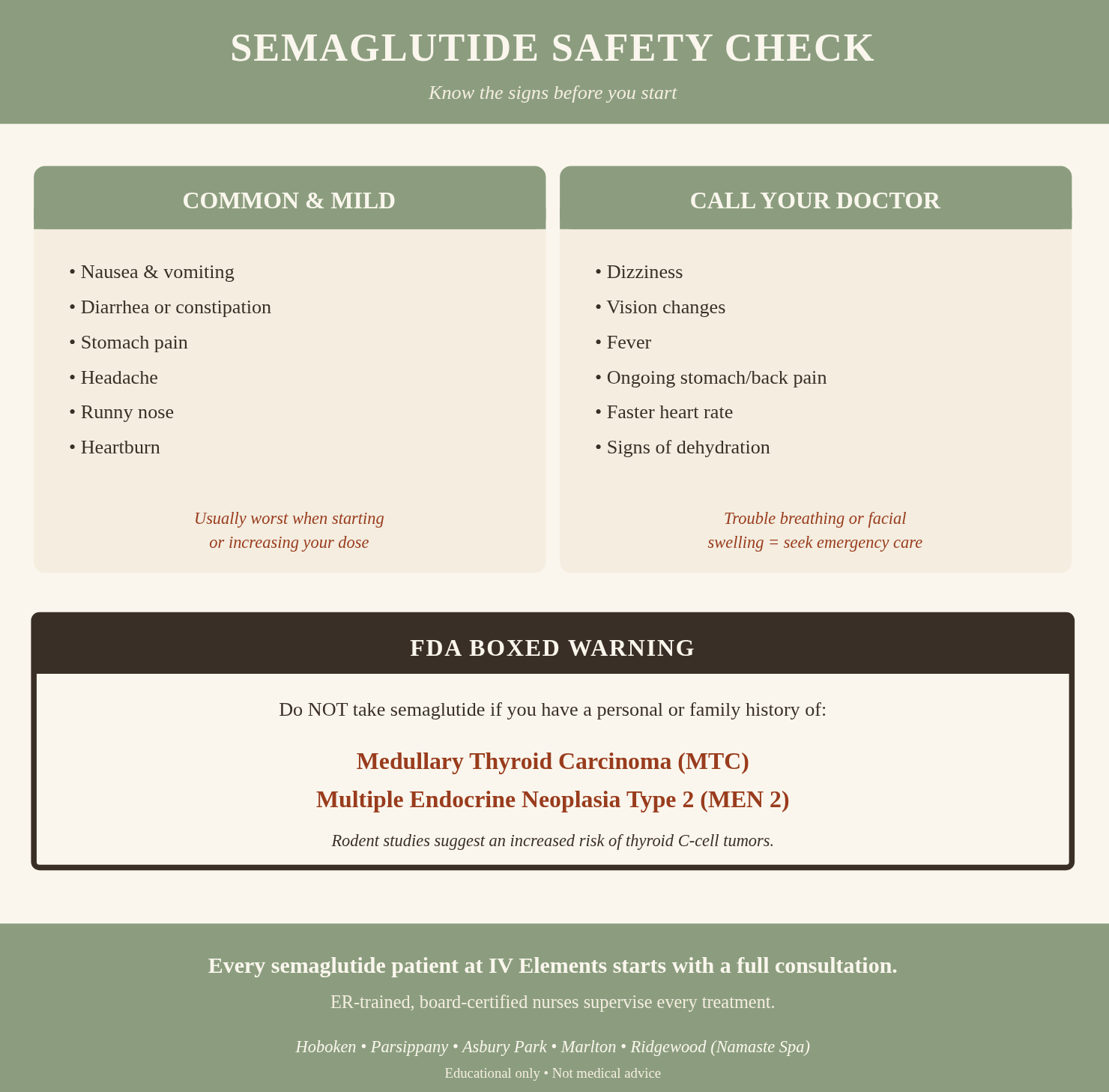
The most common semaglutide side effects include:
- nausea and vomiting
- diarrhea
- constipation
- stomach pain
- headache
- runny nose
- heartburn
These side effects are often at their worst when you first start semaglutide or when you up your dose. If they don’t lessen or they get worse, talk to your healthcare provider.
Some people also have rarer, more serious side effects like:
- dizziness
- vision changes
- fever
- ongoing stomach and/or back pain
- faster heart rate
If you see these semaglutide warning signs, reach out to your doctor right away.
Can you have an allergic reaction to semaglutide?
Yes. Some people have allergic reactions to semaglutide that cause symptoms like rash, itching, or hives, but they’re not common. If you have these symptoms, call your healthcare provider immediately. You should seek emergency medical care if you have more serious allergic symptoms, such as:
- trouble breathing
- severe dizziness or fainting
- swelling of the face, eyes, mouth, tongue, or throat
- severe skin reactions
What are the long-term risks of semaglutide?
After using the medication on a regular basis, some people face long-term semaglutide risks, including:
- severe vomiting or diarrhea, which can lead to dehydration
- gallbladder disease
- pancreatitis
- kidney problems, usually due to dehydration
Also, if you don’t get enough resistance exercise or protein, you might see reduced muscle mass. The low appetite caused by the drug can also make it harder to get other nutrients besides protein. That’s why you should ask your healthcare provider to help you figure out a healthy eating and exercise plan before you start semaglutide.
Who should not take semaglutide?
You should not take semaglutide if you have Multiple Endocrine Neoplasia Type 2 or a personal or family history of Medullary Thyroid Carcinoma. That’s because rodent studies suggest that semaglutide may raise the risk of thyroid C-cell tumors.
You should also not use semaglutide if you’re allergic to it or any of its ingredients.
In addition, before starting semaglutide, you should tell your doctor if you are pregnant or breastfeeding or if you have a history of the following conditions:
- diabetic retinopathy
- pancreatitis
- gallbladder disease
- kidney problems
- severe gastrointestinal disease
Is semaglutide safe with other medications?
Semaglutide is safe to take with many medications. But there are some drugs that may have negative interactions. These medications might be safe to take with semaglutide in some cases, but you should be monitored by a healthcare provider:
GLP-1 receptor agonists and dual incretin drugs
Taking semaglutide with GLP-1 receptor agonists (like liraglutide and dulaglutide) or dual incretin drugs (like tirzepatide) can increase your risk of nausea, vomiting, and dehydration.
Insulin and sulfonylureas
Using semaglutide along with insulin or sulfonylureas can make you more likely to have hypoglycemia. That’s because each medication lowers your blood sugar. Hypoglycemia can cause symptoms like sweating, shaking, and confusion.
Medications that depend on stomach emptying
Semaglutide slows stomach emptying, which can delay the absorption of certain medications, including some oral birth control pills, some pain medications, and some antibiotics. This can make them less effective.
Medications that can affect kidney function
Semaglutide can cause nausea, vomiting, and dehydration. The risk of these effects goes up if you take semaglutide with medications that affect kidney function, such as NSAIDs, which can reduce kidney blood flow, and diuretics, which can increase fluid loss.
Blood thinners
If you take semaglutide with blood thinners like Warfarin, the weight loss and changes in eating patterns can affect how your body processes the medication, leading to less stable INR (blood clotting) levels.
Is semaglutide safe with alcohol?
Some people can safely drink alcohol in moderation while taking semaglutide. But others find that it makes side effects like nausea, dizziness, and dehydration worse.
Alcohol can be especially risky if you have diabetes, a history of pancreatitis, or severe gastrointestinal side effects from semaglutide. That’s why you should never drink alcohol on this medication without talking to your doctor first.
Is semaglutide safe with recreational drugs?
Researchers haven’t figured out if semaglutide interacts with recreational drugs, so you should always tell your doctor about any drugs you use before you start the medication. Drugs like cannabis, opioids, and cocaine can affect functions like appetite, blood pressure, and digestion, which could raise your risk of certain side effects.
How is semaglutide administered safely?
At IV Elements, our ER-trained nurses administer semaglutide safely by gathering your full health history before treatment. This process helps us make sure there are no contraindications that could make treatment risky.
To further protect your safety and comfort, we also combine all semaglutide treatments with vitamin B6. This nutrient may help reduce nausea, a common side effect. Our compounded B6/semaglutide comes in two forms: a subcutaneous (under-the-skin) injection and an oral tablet.
The injectable form is injected into your abdomen, thigh, or upper arm with a syringe. Most people get weekly injections to keep their levels stable, and we’ll rotate the injection site each week to lower your risk of skin irritation. We’ll also start with a low dose and slowly increase it over time based on your response. This can help reduce side effects.
Semaglutide oral tablets are usually taken once a day when you wake up. Your body can absorb them better if you take them on an empty stomach with water. You should also swallow the tablets whole instead of crushing, splitting, or chewing them and then avoid eating or drinking for at least 30 minutes.
No matter which form you get, our nurses will help you stay safe by carefully monitoring your treatment progress.
Get personalized semaglutide therapy from IV Elements
Now that you understand semaglutide’s safety profile, you can schedule a treatment consultation with the board-certified team at IV Elements. As members of the Physicians’ Association for Anthroposophic Medicine (PAAM) and the Institute of Functional Medicine (IFM), we’re committed to providing safe semaglutide in NJ and the surrounding areas.
Our experienced nurses offer customized semaglutide injections and oral tablets at our drip lounges in Hoboken, Parsippany, Asbury Park, and Marlton. You can also get semaglutide from our partnership location in Ridgewood at Namaste Spa. If you’d rather stay home, take advantage of our mobile injection service that covers NJ, NYC, Philadelphia, and Bucks County, or get injectable semaglutide or oral tablets delivered right to you through our ship-to-home service! To learn more about our semaglutide offerings, book your consultation today.
Frequently Asked Questions
Is compounded semaglutide safe?
Compounded semaglutide can be safe when it’s prepared by a reputable, licensed pharmacy. However, compounded semaglutide products do pose more safety risks since they have not been reviewed by the FDA. At IV Elements, we work with licensed compounding pharmacies and prescribe semaglutide only when medically appropriate after comprehensive consultation.
What are the side effects of semaglutide?
The most common side effects of semaglutide include nausea, diarrhea, and stomach pain. They’re most common when you first start the drug or up your dose.
Rarer, more serious side effects include dizziness, trouble breathing, fever, and rapid heart rate. If you have these symptoms, you should seek medical help right away.
Can semaglutide cause pancreatitis or thyroid problems?
Some research suggests that long-term use of semaglutide may increase the risk of pancreatitis, and rodent studies suggest that the medication could also increase the risk of thyroid C-cell tumors. But more research is needed to confirm these risks.
Can you take semaglutide while using alcohol or other drugs?
Some people can use alcohol or other drugs in moderation while taking semaglutide, but substance use might increase your risk of side effects. That’s why you should talk to your healthcare provider before using alcohol or other drugs while taking semaglutide.
What should I tell my doctor before starting semaglutide?
Give your doctor your full health history, and make sure to talk about any thyroid issues, pancreatitis, gallbladder problems, kidney disease, diabetic retinopathy, or severe gastrointestinal distress. You should also talk about any medications or supplements you take, your diet, your weight history, and any pregnancy plans. This will help your doctor figure out if semaglutide is safe for you.
Where can I get semaglutide in NJ?
You can get semaglutide in NJ at IV Elements’ drip lounges in Hoboken, Parsippany, Asbury Park, and Marlton. We also offer in-home services across NJ, NYC, Philadelphia, and Bucks County, as well as a convenient ship-to-home option.
References
- Manage Diabetes with IV Therapy. (2025, November 5). IV Elements. https://ivelements.net/diabetes
- Weight Loss Treatments in NJ, NYC, and PA | IV Elements. (2023, May 21). IV Elements. https://ivelements.net/overweight-obesity
- FDA Approves First Medication for Obstructive Sleep Apnea. (2024, December 20). U.S. Food and Drug Administration. https://www.fda.gov/news-events/press-announcements/fda-approves-first-medication-obstructive-sleep-apnea
- Semaglutide Effects on Cardiovascular Outcomes in People With Overweight or Obesity. (n.d.). American College of Cardiology. https://www.acc.org/Latest-in-Cardiology/Clinical-Trials/2023/11/09/15/04/select
- Marso, S. P., Bain, S. C., Consoli, A., Eliaschewitz, F. G., Jódar, E., Leiter, L. A., Lingvay, I., Rosenstock, J., Seufert, J., Warren, M. L., Woo, V., Hansen, O., Holst, A. G., Pettersson, J., & Vilsbøll, T. (2016). Semaglutide and Cardiovascular Outcomes in Patients with Type 2 Diabetes. New England Journal of Medicine, 375(19), 1834–1844. https://doi.org/10.1056/nejmoa1607141
- MedlinePlus. (2022, August 15). Semaglutide injection: MedlinePlus drug information. Medlineplus.gov. https://medlineplus.gov/druginfo/meds/a618008.html
- Kommu, S., & Whitfield, P. (2024, February 11). Semaglutide. PubMed; StatPearls Publishing. https://www.ncbi.nlm.nih.gov/books/NBK603723/
- Pillarisetti, L., & K. Agrawal, D. (2025). Semaglutide: Double-edged Sword with Risks and Benefits. Archives of Internal Medicine Research, 8(1). https://doi.org/10.26502/aimr.0189
- Schedule Your IV Therapy At-Home | Book IV Drip Now. (2024, November 4). IV Elements. https://ivelements.net/book-now-1
- U.S. Food and Drug Administration. (2026, February 4). FDA’s concerns with unapproved GLP-1 drugs used for weight loss. https://www.fda.gov/drugs/drug-alerts-and-statements/fdas-concerns-unapproved-glp-1-drugs-used-weight-loss
 Share
Share  Tweet
Tweet  Share
Share  Email
Email