Mistletoe Therapy Explained: A Guide to Integrative Cancer Support
- February 14, 2023
- Written by : Rebecca LaMarca, MSN, APN-BC, CNS
Written and medically reviewed by Rebecca LaMarca, MSN, APN-BC | July 2026
You might think of mistletoe as a simple holiday decoration. But the plant can do so much more than make a space more festive. For hundreds of years, mistletoe (also called Viscum album) has been used as a natural treatment for various conditions. Some researchers even think mistletoe may help improve quality of life for cancer patients when used alongside conventional treatments. Here’s what you should know about mistletoe therapy and what science says about its possible role in cancer recovery.

Disclaimer: Mistletoe therapy is not FDA-approved for the treatment of cancer, and its safety and effectiveness have not been established. It should not replace standard cancer treatments.
What is mistletoe therapy?
Mistletoe therapy (also known as “mistletoe extract therapy” or “anthroposophic mistletoe therapy”) is an integrative medicine treatment that’s sometimes used alongside conventional cancer care. It involves mistletoe extract, a preparation made from the leaves, stems, and berries of the mistletoe plant.
This extract contains many active compounds, including carbohydrates, amino acids, and enzymes. But the plant’s most important compounds when it comes to health benefits are lectins. Lectins are naturally occurring proteins that may influence immune system activity and tumor growth.
In many European countries, healthcare professionals use mistletoe IV therapy alongside conventional cancer treatments. It’s most commonly used in Germany, Switzerland, and Austria, where mistletoe extracts like Iscador, Helixor, and AbnobaVISCUM are part of integrative cancer care.
Is mistletoe therapy FDA approved?
In the U.S., mistletoe therapy has not been approved by the FDA to treat cancer or any other health condition. But medical doctors, naturopathic doctors, nurse practitioners, and doctors of anthroposophic medicine who are trained in mistletoe therapy may prescribe it alongside conventional, FDA-approved cancer treatments like chemotherapy and radiation.
What are the benefits of mistletoe therapy?
Some studies suggest mistletoe therapy may help cancer patients by reducing treatment side effects, supporting immune function, and influencing cellular responses to tumors — though research is still emerging.
Fewer cancer treatment side effects
Chemotherapy and radiation play an important role in many cancer treatment plans. But they can cause side effects that impact daily life, including:
- fatigue
- nausea and vomiting
- loss of appetite
- trouble concentrating
- poor mood
- lymphedema (swelling in an arm or leg)
- hair loss
- body pain
These side effects occur because treatments that kill cancer cells may also harm healthy cells by damaging DNA and disrupting normal cell growth.
After getting mistletoe therapy, some chemotherapy and radiation patients report reduced side effects and improved quality of life. Scientists have not determined why this happens. Some early research suggests mistletoe may affect cellular responses to DNA damage, but these findings have not been confirmed.
Stronger immunity
Every day, your immune system helps protect you from bacteria, viruses, and other harmful substances. But cancer treatments can weaken the immune system over time.
Some research suggests that mistletoe may support the immune system by stimulating the release of immune-signaling molecules called cytokines, which help immune cells communicate more effectively. It may also activate natural killer (NK) cells, which can help destroy cancerous cells. However, more research is needed to confirm these effects.
Possible effects on tumor activity
A 2021 study found improved tumor response outcomes when mistletoe extract was used alongside chemoradiation compared with chemoradiation alone. Laboratory studies have shown mistletoe extract can induce apoptosis (the body’s programmed cell death pathway) in cancer cells in cell-culture settings — though it’s not yet clear how this translates to human treatment outcomes. This process may slow cancer cell growth in laboratory studies, but more research is needed.
Research also suggests that mistletoe may stimulate certain immune cells involved in surveillance against tumors. While these findings are promising, more studies are needed to confirm mistletoe’s effects on tumors.
What research shows about mistletoe therapy for cancer support
| Potential Benefit | How It May Work | What the Research Shows |
|---|---|---|
| Improved quality of life during chemotherapy or radiation | May help reduce fatigue, nausea, appetite loss, and other treatment side effects through immune and cellular modulation | Systematic review and meta-analysis (Loef & Walach, 2020) support quality of life improvements as the most-studied outcome for mistletoe therapy |
| Immune system support | May stimulate release of signaling cytokines and activate natural killer (NK) cells that help identify abnormal cells | Some laboratory and clinical evidence; real-world outcomes are still under active study |
| Tumor response (as an adjunct only) | May induce apoptosis (programmed cell death) in cancer cells in lab studies; may enhance immune surveillance of tumors | Emerging clinical evidence from adjunct trials (Baek et al., 2021); majority of evidence remains from laboratory studies |
| Overall symptom management | Mechanisms not fully understood, but may involve cellular repair pathways and stress-response modulation | Individual response varies; most benefit reported when mistletoe is used alongside conventional oncology care, not in place of it |
How does mistletoe therapy work?
If you receive mistletoe therapy, your provider will coordinate timing carefully around your chemotherapy or radiation schedule. At the start of mistletoe therapy, the provider will go over your health history and treatment goals. They’ll also make sure the treatment has been approved by your oncologist and the rest of your cancer care team.
Next, they will insert your IV, typically in your arm or hand. They’ll then start your drip that contains mistletoe extract. The mistletoe enters your bloodstream directly, which means it doesn’t take long for it to start affecting your cells. In most cases, the therapy lasts about two to three hours.
After the session, your provider will make sure you’re feeling comfortable and discuss how to cope with any side effects. They’ll also help you figure out when to schedule your next session. Many people get mistletoe therapy about three days a week, but your specific treatment schedule will depend on your needs and your doctor’s recommendations.
Is mistletoe therapy safe?
Mistletoe therapy seems to be generally well tolerated when administered and supervised by a healthcare professional. However, it can have side effects, including:
- fatigue
- headache
- chills
- mild nausea or stomach upset
These side effects usually go away within a couple hours to a couple days. Some people may also experience allergic reactions, and others may have strong fever or inflammatory responses at higher doses.
In addition, because mistletoe may affect the immune system, it might have unpredictable interactions with chemotherapy, immunotherapy, autoimmune conditions, or certain medications.
That’s why you should only get mistletoe therapy after discussing it with your oncologist. Also, you should only receive it under the supervision of a licensed healthcare provider who has been certified in mistletoe therapy.
Mistletoe therapy is not FDA-approved in the U.S. Its safety depends on factors such as dose, preparation, and medical supervision. Always talk to your doctor before starting any IV therapy.

Explore mistletoe therapy at IV Elements
You can learn more about the benefits of mistletoe therapy here. At IV Elements, our certified nurses are committed to providing compassionate, integrative care at our drip lounges in Hoboken, Asbury Park, Parsippany, and Marlton. We also provide convenient in-home services across NJ, NYC, and Philadelphia. Book your consultation today.
Frequently Asked Questions
What does research say about mistletoe and cancer?
Some studies suggest that mistletoe may support cancer patients by reducing side effects of cancer treatments like chemotherapy and radiation, strengthening the immune system, and improving tumor outcomes. However, more research is needed to confirm these findings.Is mistletoe used to treat cancer in the U.S.?
Mistletoe has not been approved by the FDA to treat cancer or any health condition. But some healthcare professionals use it in integrative care settings in conjunction with FDA-approved cancer treatments.Who can prescribe mistletoe therapy in the United States?
In the U.S., healthcare professionals (including medical doctors, naturopathic doctors, nurse practitioners, and doctors of anthroposophic medicine) may prescribe mistletoe if they are trained in mistletoe therapy and are using it alongside FDA-approved treatments.How does mistletoe support the immune system during cancer treatment?
Studies suggest that mistletoe might support the immune system during cancer treatment by stimulating the release of molecules that help immune cells communicate and by activating natural killer (NK) cells that help destroy cancerous cells.Who in the tri-state area offers integrative mistletoe therapy?
The clinical team at IV Elements offers integrative mistletoe therapy at our drip lounges in Hoboken, Asbury Park, Parsippany, and Marlton, New Jersey. In addition, our mobile mistletoe therapy providers serve NJ, Philadelphia, and NYC, which means you can get the treatment right from the comfort of your own home.How much does mistletoe therapy cost in NJ?
The cost of mistletoe therapy in NJ depends on the clinic and your needs. You can explore IV Elements’ pricing here.References
- Natural Healing With Mistletoe IV Therapy. (2022, July 20). IV Elements. https://ivelements.net/mistletoe-therapy
- Loef, M., & Walach, H. (2020). Quality of life in cancer patients treated with mistletoe: a systematic review and meta-analysis. BMC Complementary Medicine and Therapies, 20(1). https://doi.org/10.1186/s12906-020-03013-3
- Marvibaigi, M., Supriyanto, E., Amini, N., Abdul Majid, F. A., & Jaganathan, S. K. (2014). Preclinical and Clinical Effects of Mistletoe against Breast Cancer. BioMed Research International, 2014, 1–15. https://doi.org/10.1155/2014/785479
- Integrative Medicine During Chemo and Radiation | IV Therapy. (2025, November 6). IV Elements. https://ivelements.net/chemotherapy-radiation-recovery
- CDC. (2024, March 7). Side Effects of Cancer Treatment. Cancer Survivors. https://www.cdc.gov/cancer-survivors/patients/side-effects-of-treatment.html
- Kwon, Y.-S., Chun, S.-Y., Kim, M.-K., Nan, H.-Y., Lee, C., & Kim, S. (2021). Mistletoe Extract Targets the STAT3-FOXM1 Pathway to Induce Apoptosis and Inhibits Metastasis in Breast Cancer Cells. The American Journal of Chinese Medicine, 49(02), 487–504. https://doi.org/10.1142/s0192415x21500221
- Immunity Support IV Drip. (2025, November 10). IV Elements. https://ivelements.net/vitamin-drips/immune-booster
- Zitvogel, L., Kepp, O., & Kroemer, G. (2011). Immune parameters affecting the efficacy of chemotherapeutic regimens. Nature Reviews Clinical Oncology, 8(3), 151–160. https://doi.org/10.1038/nrclinonc.2010.223
- Mistletoe Extracts (PDQ®)–Health Professional Version – National Cancer Institute. (2002, December 21). National Cancer Institute. https://www.cancer.gov/about-cancer/treatment/cam/hp/mistletoe-pdq
- Kubala, J. (2021, August 25). Does Mistletoe Help Treat Cancer? An Evidence-Based Look. Healthline; Healthline Media. https://www.healthline.com/nutrition/mistletoe-and-cancer
- Baek, J., Jeon, Y., Han, K.-W., Dong Hae Jung, & Kim, K.-O. (2021). Effect of mistletoe extract on tumor response in neoadjuvant chemoradiotherapy for rectal cancer: a cohort study. World Journal of Surgical Oncology, 19(1). https://doi.org/10.1186/s12957-021-02293-4
- Ostermann, T., Raak, C., & Büssing, A. (2009). Survival of cancer patients treated with mistletoe extract (Iscador): a systematic literature review. BMC Cancer, 9(1). https://doi.org/10.1186/1471-2407-9-451
 Share
Share  Tweet
Tweet  Share
Share  Email
Email 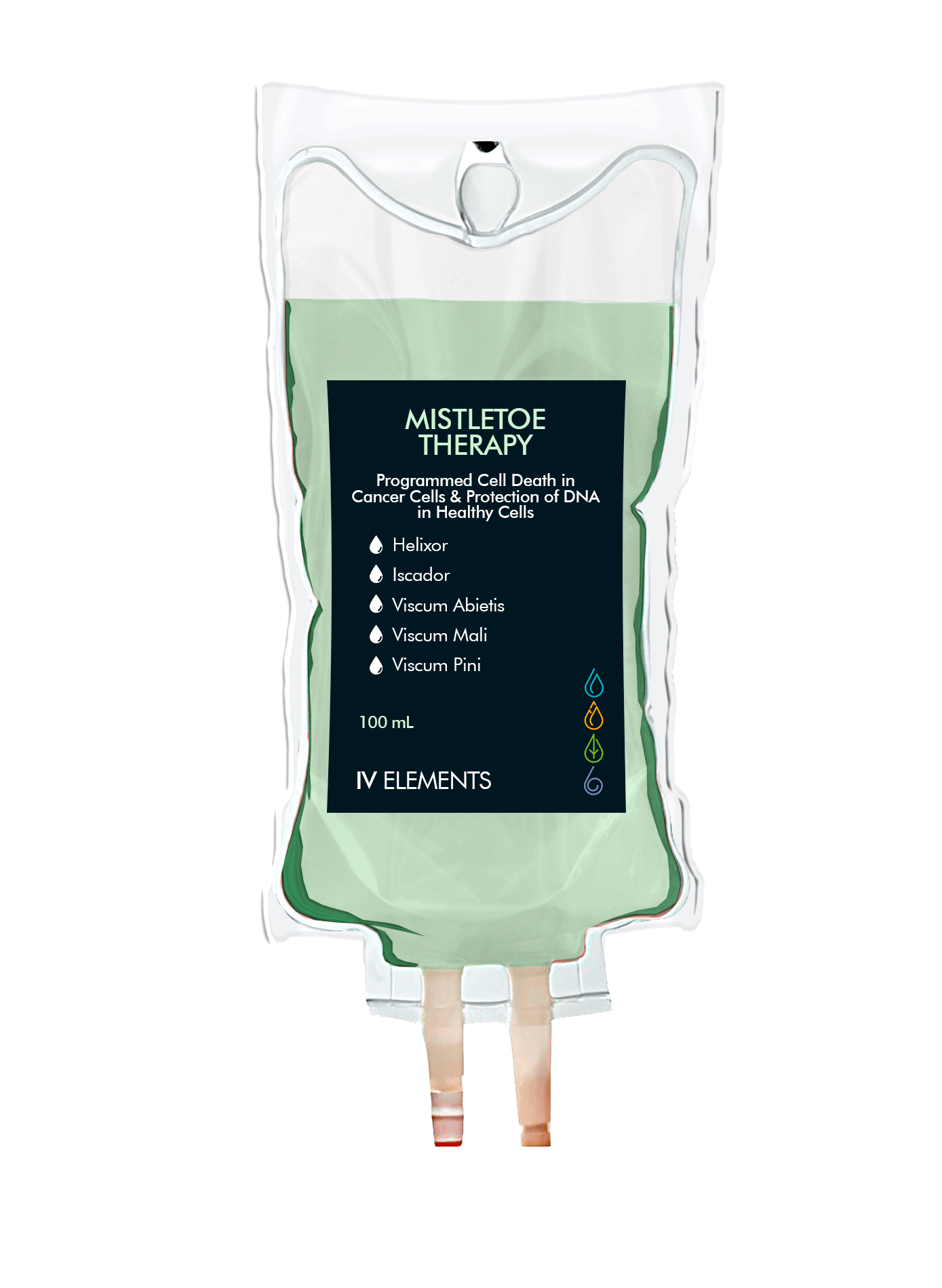
At-Home Mistletoe Injection Therapy
Mistletoe plant has been used as an alternative method to treat cancer. It is the most widely studied and evidence-based, naturopathic medicine prescribed for cancer clients in Europe, in Germany you can receive it intravenously or as a Mistletoe Injection.