How Often Can You Get an IV Therapy Treatment?
- October 30, 2023
- Written by : Rebecca LaMarca, MSN, APN-BC, CNS
Intravenous (IV) therapy can help boost your hydration and nutrition levels, delivering health benefits based on your needs. If you’re interested in this type of treatment, then understanding how the process works, how often you can get IV therapy, and its results can help you decide if it’s right for you.
How Soon Does IV Therapy Work?
IV therapy can positively impact a person’s well-being, but the time it takes to feel better can vary depending on the specific treatment and the individual. Here’s a breakdown of the factors that influence the speed of IV therapy and nutrient absorption:
Impact of IV Therapy
IV therapy can help boost health and hydration, but its impact depends on your condition:
- Immediate relief: Some IV treatments, like pain medications or antinausea drugs, can provide rapid relief within minutes. Patients may feel better almost instantaneously after administration.
- Short-term conditions: For acute conditions, like dehydration, you might be monitored every 15 to 30 minutes to see if the IV therapy is working. After a few hours, your body should rehydrate, and electrolyte balance should be restored.
- Long-term conditions: For chronic conditions or nutrient deficiencies, it may take several IV sessions over days or weeks to see significant improvements in symptoms and overall health.
Nutrient Absorption
Nutrient absorption will depend on your treatment, the nutrients and your body. While IV therapy can help your body absorb nutrients faster than oral methods, different factors affect the reabsorption rate. Nutrients are absorbed based on:
- Rapid absorption: Nutrients delivered intravenously bypass the digestive system, leading to near-immediate absorption. Rapid absorption is crucial for individuals with malabsorption issues or those who require a quick boost of essential nutrients.
- Individual variability: The speed of nutrient absorption can vary from person to person, but nutrients from IV therapy generally enter the bloodstream within minutes.
IV therapy’s speed and effectiveness also depend on proper treatment administration, including the correct dosage and rate. Professional guidance is crucial to help you determine the proper treatment plan and monitor your progress.
How Long Does IV Therapy Last?
IV therapy’s benefits may last a few days to a few weeks — depending on how your body processes the nutrients and the type of IV treatment you receive. The individual’s health and specific condition being treated will influence how long the effects last.
Duration of Benefits
All the above factors affect how long you benefit from your IV therapy. Each case is different, but you might see short-term or long-term effects:
- Short-term relief: Some IV therapies, such as pain relief or hydration for mild dehydration, may provide short-term benefits that last for a few hours to a day.
- Longer-term effects: IV therapy’s benefits can be longer-lasting for certain chronic conditions or nutrient deficiencies and may continue for several days and potentially over a week. These treatments aim to address underlying health issues, leading to sustained improvements.
Maintenance Sessions
Maintenance sessions may be used to help boost your overall health. These sessions are used to help with:
- Chronic conditions: A series of IV sessions may be used to achieve long-term benefits in chronic illnesses or deficiencies. Scheduled sessions may occur regularly, such as weekly or monthly, to maintain the desired effects.
- Nutritional support: Nutrient IV therapy, like vitamin infusion therapy, may require periodic sessions to maintain optimal nutrient levels. Individuals with ongoing deficiencies or conditions that affect nutrient absorption may need more frequent sessions.
Lifestyle and Health Maintenance
There are some steps you can take to maximize the benefits of IV therapy:
- Healthy lifestyle: Adopting a healthy lifestyle can help extend the benefits of IV therapy. This includes maintaining a balanced diet, getting regular exercise and managing stress. These factors contribute to overall well-being and complement the effects of IV treatments.
- Consultation: Regular follow-up appointments with your specialist can help determine the need for additional sessions or adjustments to the treatment plan based on your progress and changing health needs.
How Often Should You Get IV Therapy?
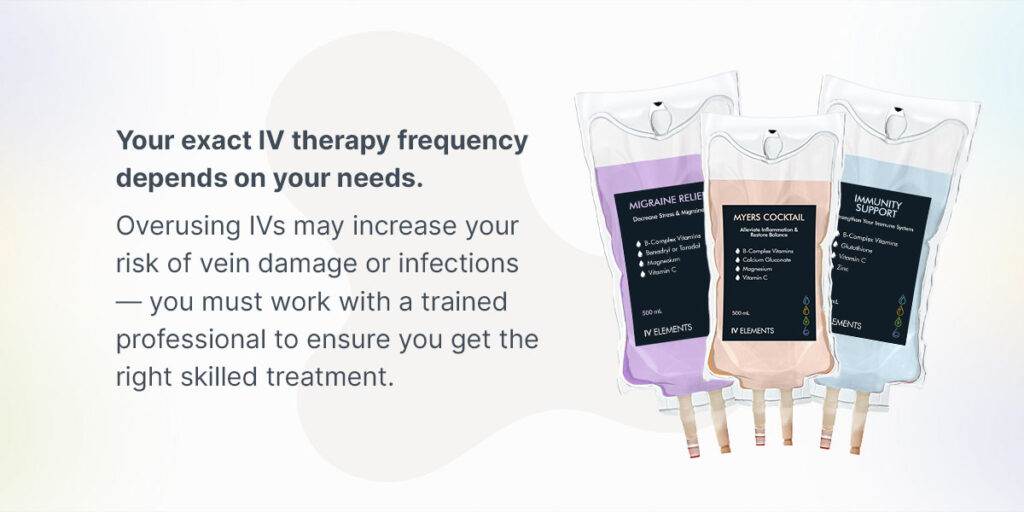
Your exact IV therapy frequency depends on your needs. Work with your medical provider to find the most beneficial frequency for you. It’s essential to strike a balance to avoid potential risks associated with getting IV therapy too often. Overusing IVs may increase your risk of vein damage or infections — you must work with a trained professional to ensure you get the right skilled treatment.
The frequency of IV therapy varies widely depending on the treatment and your health needs. Here are some considerations for different types of IV therapy:
- Hydration: A single IV session might be sufficient for mild dehydration or occasional hangovers. It’s best to listen to your body and seek treatment when needed.
- Cancer treatments: Cancer patients receiving chemotherapy or other specialized treatments may have scheduled IV sessions as part of their treatment plan. The oncologist determines the frequency and duration based on the type and stage of cancer.
- Nutrient IVs: Nutrient IVs should be tailored to address specific deficiencies. Your nurses determine frequency based on your needs and goals.
- Immune support: IV immune-boosting treatments are typically administered on a case-by-case basis. They might be used as needed during illness or recovery. Work with your nurses to find a schedule that avoids overuse to mitigate potential side effects.
Can You Get IV Therapy Treatments Too Often?
You should do IV therapy based on your health needs. Your nurses will discuss your concerns, current health status and treatment plan to help you find the right frequency and plan for your needs. In some cases, patients may need to use caution when getting IV therapy. Patients with these cases should consult their providers to see what their plan may need to accommodate:
- Electrolyte imbalance: Frequent IV hydration without proper monitoring can disrupt electrolyte balance, potentially causing complications like heart rhythm disturbances.
- Vitamin and mineral supplements: While IV vitamin drips are popular and beneficial, overuse may lead to nutrient imbalances or unnecessary exposure to high doses of vitamins.
- Immune support: IV immune-boosting treatments should be used under expert supervision to avoid autoimmune reactions or vein infections.
Different IV Drip Therapy
Working with your expert nurses can help you get the IV services you need. Different IV drip options let you target your concerns, tailoring treatment plans to your body. Here are a few IV drop options you can choose from:
- Hydration: Hydration IV can help boost your fluid and electrolyte levels.
- High-dose vitamin C: High-dose vitamin C therapies are used for immune support or combined with cancer therapy. They should be administered under medical supervision to prevent overuse.
- Performance recovery: Performance recovery IVs are packed with amino acids and essential vitamins to help your body recover after intense exercise.
Different drips have different uses and frequencies. IV therapy treatments can be overused, leading to potential health risks. Follow your medical professional’s advice to ensure you get the proper schedule and IVs for your health needs.

Book a Session With IV Elements
Unlock the path to renewed vitality with IV Elements. Our expert team is dedicated to providing personalized IV therapy solutions tailored to your unique health goals. Whether you’re seeking hydration, immune support or essential nutrient replenishment, we’ve got everything you need. Don’t wait to experience the benefits of IV therapy. Book your session with IV Elements now and embark on a journey to enhanced wellness.
REFERENCES
1. Rehydration Therapy: https://www.cdc.gov/cholera/treatment/
2. The Prevalence and Indications of Intravenous Rehydration Therapy in Hospital Settings: A Systematic Review: https://www.ncbi.nlm.nih.gov/pmc/articles/PMC9844368/#
3. Electrolyte Abnormalities in Patients Presenting With Ventricular Arrhythmia (from the LYTE-VT Study): https://pubmed.ncbi.nlm.nih.gov/32565090/
 Share
Share  Tweet
Tweet  Share
Share  Email
Email